


Full-Mouth Rehabilitation in Pompano Beach: Rebuilding a Smile When It’s More Than One Tooth
By Dr. Nicole M. Berger, DDS — South Florida Smile Spa, Pompano Beach
Quick answer
What is full-mouth rehabilitation, and when do you actually need it?
Full-mouth rehabilitation is one staged treatment plan that rebuilds the bite as a whole — instead of repairing teeth one at a time — when wear, decay, fractures or missing teeth have changed how the upper and lower teeth meet. You need it when individual repairs keep failing, chewing has become one-sided or uncomfortable, teeth have visibly shortened, or a dentist has told you the bite itself has shifted. In Pompano Beach, Dr. Nicole M. Berger, DDS plans it from 3D cone beam imaging and bite records, sequences it over several months, and uses IV sedation for the longer appointments.
Almost nobody arrives in my chair asking for full-mouth rehabilitation. They arrive with a crown that keeps coming off, a bridge that has been “fine” since 2011 and suddenly is not, a front tooth that chipped again, or a molar that hurts only when they chew on that side. They have been managing problems one at a time for years — and every individual decision made sense when it was made.
What I see when I look at the whole mouth is different. I see a bite that has quietly shifted, teeth carrying loads they were never built to carry, and a set of repairs that are now compensating for each other. At that point, fixing the next tooth in line is not a plan. It is another round of the same problem.
This post explains how I decide when a mouth needs to be rebuilt as a system, how the process is planned and sequenced here in Pompano Beach, and what patients should realistically expect — including the part where most of the first appointment is a conversation.
What full-mouth rehabilitation actually is (and what it is not)
Full-mouth rehabilitation — you will also see it called full-mouth reconstruction — is a single, coordinated treatment plan that restores every tooth that needs restoring, replaces the teeth that are missing, and re-establishes a bite in which the upper and lower teeth meet evenly and the jaw joints and muscles are no longer fighting the teeth. The individual procedures are familiar: crowns, onlays, veneers, implants, gum treatment, sometimes root canal treatment or orthodontics. What makes it rehabilitation is that they are planned together, in a deliberate order, toward one end result.
It is not the same thing as a smile makeover. A smile makeover is primarily cosmetic and usually involves teeth that are structurally healthy. Rehabilitation starts from function — chewing, jaw position, tooth structure — and the aesthetics follow from a bite that works.
It is also not the same thing as All-on-4. All-on-4 replaces an entire arch with implants and a fixed bridge, which is the right answer when the teeth cannot be saved. Rehabilitation is usually about a mouth where many teeth can and should be saved, with implants filling only the gaps. I write about when each approach fits on our All-on-4 page.
Signs the bite itself has failed — not just one tooth
These are the patterns that tell me we have moved past tooth-by-tooth dentistry:
- Repairs that keep failing. A crown that debonds twice, a filling that fractures within a year, a bridge that loosens — restorations fail early when the forces on them are wrong, not because the materials are weak.
- Teeth that have visibly shortened. Front teeth that used to show when you spoke and no longer do. Flat, glassy edges on the back teeth. This is usually years of clenching or grinding, and it lowers the whole bite.
- Chewing that has gone one-sided or careful. Patients tell me they “eat around” certain teeth. Over time the side doing all the work wears faster and the joints load unevenly.
- Chipping of the edges, especially after previous cosmetic work. Veneers or bonding that keep chipping are rarely a materials problem; they are a bite problem.
- Jaw fatigue, morning headaches or clicking that came on as the teeth changed. I cover the muscular side of this in my TMJ and jaw pain post.
- Multiple missing teeth with drifting neighbours. Once teeth tip and over-erupt into gaps, there is often no longer room to replace the missing ones without addressing the bite first.
- A dentist has said the words “your bite has collapsed” or “we have lost vertical dimension.” Both mean the same thing: the distance between the jaws when you bite has shortened because the teeth have worn or been lost.
Why one-tooth-at-a-time stops working
Teeth do not work in isolation. When one molar is lost and not replaced, the tooth behind it tips forward and the one above it drifts down into the space. The bite now contacts unevenly, so the front teeth start taking chewing force they were never designed to take, and they wear or chip. The patient chews on the other side, and that side wears faster. A crown placed on a worn tooth sits in a bite that is already wrong, so it fails early — and the next dentist, quite reasonably, replaces the crown.
That is the compensation cycle. Each repair is correct for the tooth and wrong for the mouth. The only way out of it is to stop and ask what the bite should be, then rebuild every tooth toward that answer at once. This is why I am direct with patients: the alternative to a comprehensive plan is not “doing nothing.” It is continuing to do reactive work on a foundation that keeps shifting.
Grinding sits underneath a large share of these cases. If you wake with a tight jaw or a dull headache at the temples, read my post on bruxism and nighttime grinding — it explains the wear patterns I look for and why a night guard protects teeth but does not answer the question of why the grinding is happening.
How I plan it: the workup comes before any drilling
The planning phase is where full-mouth rehabilitation is won or lost. Sequencing badly is expensive and slow to undo, so I would rather spend an extra appointment on records than reverse a decision later. At South Florida Smile Spa the workup includes:
- A long conversation. What bothers you, what you want to be able to eat, how the mouth got here, what your medical history looks like — blood sugar, blood thinners, bone medications, sleep, reflux. Medical history changes the plan more often than patients expect.
- Cone beam 3D imaging (CBCT), taken in-house. It shows me bone height and width for any implant sites, the position of the nerve and sinus, hidden infection at root tips, and cracks a flat X-ray cannot show. It is also what my periodontist works from when implants are part of the plan.
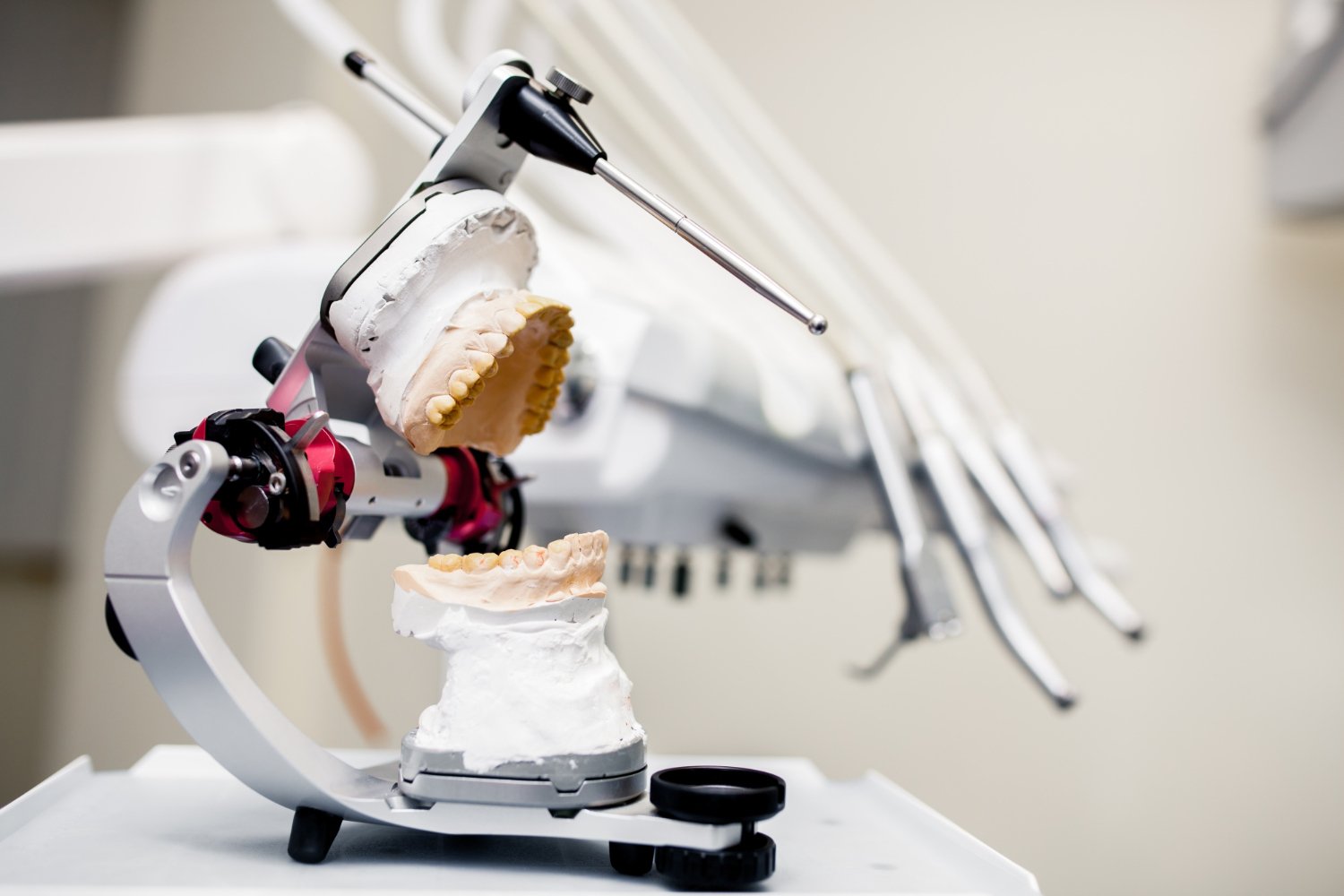
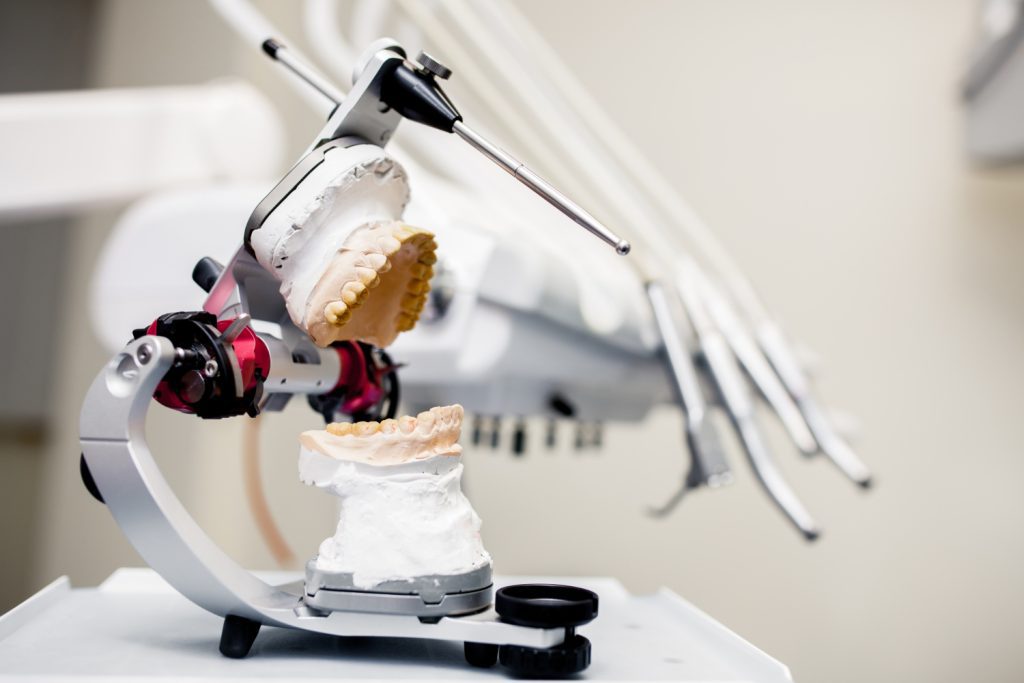
- Photographs, a digital scan and mounted models. The models are mounted on an articulator that reproduces how your jaw actually moves, so I can see where the teeth collide and where they miss.
- A bite (occlusal) analysis. Where is the jaw comfortable? How much vertical height has been lost? Can it be restored, and how much of it? This decides the shape of every restoration that follows.
- A wax-up or digital design of the finished result. Before anyone touches a tooth, we build the end point — and then use it to make the provisionals you will test-drive.
One point about scope, because patients deserve to know who does what. I plan the case, manage the sequence, and design and deliver the final restorations. When implants are part of the plan, surgical placement and any bone grafting are performed by the periodontist on our team, working from my plan and the CBCT. If you have been told there is not enough bone for implants, that is a measurement, not a verdict, and it is one of the things the scan settles.
The sequence: how a full-mouth plan unfolds
Every case is different, but the order is remarkably consistent, because each phase depends on the one before it.
Phase 1 — Foundation
Nothing lasting can be built on infection. Gum disease is treated first; decay is removed; teeth that need root canal treatment get it (I perform routine cases here and refer complex ones); teeth that cannot be saved are extracted. If you are unsure whether a given tooth is worth saving, my root canal vs dental implant post walks through exactly how that call is made.
Phase 2 — Provisionals: the test drive
This is the phase patients underestimate and I value most. Using the wax-up, I build temporary restorations at the new bite position and you live with them — usually for several weeks to a few months. We check that you can chew comfortably, that speech is normal, that the jaw muscles are quiet in the morning, and that the length and shape of the teeth look right in your face. Anything we want to change, we change here, in plastic, not in porcelain.
Phase 3 — Surgical
Implants and any grafting are placed by our periodontist, guided by the CBCT and the planned tooth positions. Then they heal. This is usually the longest wait in the process, and it is time well spent — implants that integrate fully carry a bite for decades.
Phase 4 — Final restorations
Crowns, onlays, veneers and implant crowns are made to the bite we proved in the provisionals. Some are milled the same day with our CEREC system; larger cases go to the lab in stages. When a single gap is the question, implant vs bridge is a separate decision I have written about.
Phase 5 — Protection and maintenance
If grinding caused the wear, grinding will attack the new work. A custom night guard is not optional after rehabilitation, and periodontal maintenance visits keep the foundation stable. This phase is what makes the investment last.
Where IV sedation fits
Full-mouth cases involve long appointments — sometimes three or four hours — and many of the patients who need this work have been avoiding the dentist for years, often out of fear. IV sedation solves both problems. Under sedation I can complete an entire phase in one visit instead of four, and the patient experiences it as a calm, quiet morning they barely remember.
I administer and monitor IV sedation personally; my training in conscious sedation and general anesthesia comes from a hospital general practice residency at Montefiore Medical Center, and Florida permits our office to provide it. If fear is the reason the mouth reached this point, my guide for patients who are terrified of the dentist is the place to start — no judgment, just a plan.
A representative case
The following is a composite scenario drawn from patterns seen in practice, not the record of any single patient. A woman in her early sixties came in because a front tooth had chipped for the third time. She had a bridge on the lower right from years earlier, two crowns that had been replaced, and had stopped chewing on the left because a molar there was sensitive. Her front teeth were short and flat; she said she had “always ground a bit.”
The scan showed a cracked lower molar, bone loss under the old bridge and a healthy upper arch that had simply worn down. We treated the gums first, extracted the cracked molar, and built provisionals that restored the lost height.
After two months of comfortable chewing on both sides, the periodontist placed implants where the bridge and the molar had been, and once they integrated I delivered the final crowns and onlays, with a night guard on the day the last one went in. Her morning headaches stopped during the provisional phase — before a single final restoration was placed.
Why this matters beyond your teeth
A collapsed bite is a whole-body issue in ways patients rarely connect. People who cannot chew comfortably drift toward soft, processed food and away from raw vegetables, whole fruit, nuts and lean protein — I go into the research on this in Missing Teeth Change How You Eat.
The untreated gum disease that usually accompanies a failing dentition is a chronic inflammatory condition, and researchers have documented consistent associations between periodontal disease and cardiovascular disease and diabetes; the American Dental Association summarizes what is known on its MouthHealthy gum disease page. These are associations rather than proven causes, and I am careful to say so — but treating gum inflammation is worth doing on its own merits, and it is the first phase of every rehabilitation for exactly that reason. The National Institute of Dental and Craniofacial Research reaches the same careful conclusion in its 2024 review of the oral-systemic connection: gum inflammation and conditions such as heart disease and diabetes share risk factors and can aggravate each other, without one being proven to cause the other.
If you live with diabetes or have been told about the gum disease and heart disease link, rebuilding the mouth is part of managing the rest of your health, not a separate cosmetic project.
How long it takes, and what recovery is really like
A rehabilitation without implants can be completed in roughly three to five months. With implants, integration adds healing time and most cases run six to twelve months from records to final restorations. That timeline is honest, and I would be suspicious of anyone promising a rebuilt mouth in a few weeks.
Recovery is phase by phase, not one long ordeal. Most patients are back to normal routines the day after a sedation appointment. The provisional phase feels like an adjustment for about a week and then feels normal. Implant surgery involves a few days of mild soreness managed with the plan we send home. And because the bite is fixed before the final work is made, the finals are the easiest part — they are simply the proven design in a stronger material.
Full-mouth rehabilitation is the treatment I spend the most chair time explaining and the least time selling. If you recognise yourself in the signs above, the next step is not a decision. It is a conversation, a scan and a set of records — and from those, a plan you can see before you commit to it.
I see full-mouth rehabilitation patients from Pompano Beach, Fort Lauderdale, Deerfield Beach, Lighthouse Point and Boca Raton. Call (954) 785-1100 or request an appointment through our website. South Florida Smile Spa is at 572 E McNab Rd, Suite 102, Pompano Beach, FL 33060.
Frequently asked questions about full-mouth rehabilitation
What is the difference between full-mouth rehabilitation and a smile makeover?
A smile makeover improves the appearance of teeth that are structurally sound — whitening, veneers, bonding. Full-mouth rehabilitation starts from function: it restores worn, broken or missing teeth and re-establishes a bite that works, and the improved appearance follows from that. Many rehabilitations look like makeovers when finished, but the planning is built around chewing, jaw position and tooth structure first.
How do I know if I need full-mouth rehabilitation?
The clearest signs are restorations that keep failing, teeth that have visibly shortened or flattened, chewing that has become one-sided, repeated chipping of front teeth or veneers, multiple missing teeth with neighbours drifting, and jaw fatigue or morning headaches that arrived as the teeth changed. If a dentist has told you the bite has collapsed or vertical dimension has been lost, that is the same diagnosis in clinical language.
How long does full-mouth rehabilitation take?
Without implants, roughly three to five months. With implants, most cases run six to twelve months because the implants need time to integrate with the bone before the final restorations are made. The provisional phase, where you test-drive the new bite, usually lasts several weeks to a few months.
Is full-mouth rehabilitation painful?
The longer appointments at South Florida Smile Spa are typically done under IV sedation, which Dr. Berger administers and monitors personally, so patients experience them as a calm morning they barely remember. Between phases, discomfort is mild and short-lived — a few days of soreness after implant surgery and about a week of adjustment to provisionals.
Does full-mouth rehabilitation always involve dental implants?
No. Implants are used only where teeth are missing or cannot be saved. Many rehabilitations are built mostly on the patient’s own teeth with crowns, onlays and veneers, and implants fill the gaps. When implants are needed, surgical placement is performed by the periodontist on our team from Dr. Berger’s plan and cone beam scan; Dr. Berger designs and delivers the final restorations.
Will I need a night guard after full-mouth rehabilitation?
If clenching or grinding contributed to the wear, yes. The same forces that wore the natural teeth will act on porcelain, and a custom night guard is the single most important protection for the new work. It is fitted on the day the last restoration is delivered.
Can full-mouth rehabilitation improve my overall health?
It can support it. Restoring chewing capacity lets people return to a diet with more whole foods, and treating the gum disease that typically accompanies a failing dentition reduces chronic inflammation in the mouth. Research shows consistent associations between periodontal disease and conditions such as heart disease and diabetes; these are associations rather than proven causes, but improving gum health is worthwhile on its own merits and is the first phase of every rehabilitation.
Dr. Nicole M. Berger, DDS practices cosmetic, restorative and implant dentistry in Pompano Beach, Florida. More about Dr. Berger.
This article is for general education and is not a substitute for an in-person examination and diagnosis. The patient scenario is a composite and does not describe any individual patient.

Dr. Nicole M. Berger, DDS
Dr. Berger has cared for patients in Pompano Beach for over two decades at South Florida Smile Spa, with a focus on cosmetic dentistry, implants and reconstruction, and sedation options for anxious patients.