

Sedation When You Have a Heart Condition, Diabetes, or Sleep Apnea
Quick answer
A heart condition, diabetes, or sleep apnea is almost never a reason you cannot have dental sedation — it is a reason the planning has to be done first. Medical clearance for dental sedation means I review your full medical history and medication list, assign an ASA physical status, and where your condition is significant, write to your physician before we book anything. What changes on the day is monitoring, appointment timing, the depth of sedation I choose, and occasionally the setting. If you have sleep apnea, bring your CPAP machine. If you have diabetes, the fasting window is the part that needs a plan, not the sedation itself.
There is a conversation I have several times a month. Someone tells me, usually near the end of the appointment and usually a little apologetically, that they would have had the work done years ago if they could have been asleep for it — and then adds that they assumed they were not allowed, because of their heart, or their diabetes, or the machine they sleep with. That assumption has lost more teeth in this practice than almost anything else I can name.
So let me put the answer up front: a medical condition is rarely a bar to sedation. It is a reason to plan. This post is what medical clearance for dental sedation actually requires — what I need from you, what I need from your physician, what changes on the day, and the narrow circumstances in which mine is not the right office for your sedation. The question worth asking out loud is not “am I allowed to be sedated,” but “given my health, what kind of sedation makes sense, and what do you need before we book it?” That one always has an answer — nitrous oxide rather than an intravenous drip, or a letter to your cardiologist and a two-week wait. None of the answers is simply “no.”
I have written separately on how to judge whether a sedation practice is safe and on the medications I need to know about beforehand. This is the third piece: the condition itself, rather than the practice or the prescription.
What medical clearance for dental sedation actually means
“Clearance” sounds like a form someone stamps. It is better understood as a conversation with a paper trail, in three parts.
The first part is mine. The American Dental Association’s sedation guidelines leave no room to skip it: “Patients considered for moderate sedation must undergo an evaluation prior to the administration of any sedative,” and that evaluation “should consist of at least a review at an appropriate time of their medical history and medication use.” In practice I want every diagnosis, not the ones you think are dental: the cardiologist’s name, the sleep study and your machine’s pressure setting if you have them, your most recent HbA1c if you are diabetic, and the full medication list including inhalers, supplements and anything bought without a prescription.
The second part is a classification. Anaesthesia practice sorts patients onto a six-point scale of overall physical health called ASA physical status, and where you sit on it largely determines whether office-based sedation suits you at all. A healthy patient, or one with well-controlled high blood pressure, sits near the top. A patient with substantial ongoing disease sits lower, and the ADA guidelines are explicit about what follows: patients “with significant medical considerations (e.g., ASA III, IV)” “should also require consultation with their primary care physician.” That consultation is not paperwork I do to protect myself. It is me asking a question I cannot answer from a dental chair: is this condition stable enough, right now, for this.
The third part is your physician’s, and what I ask them is narrow: is the condition controlled now, has anything changed in six months, are there blood pressure or blood sugar thresholds I should not work outside, and is any drug class best avoided. I am not asking them to approve dentistry. I am asking them to describe the patient. Worth knowing: the commonest reason this process stalls is not a physician who says no. It is a patient who never mentioned the condition, so the letter was never written.
Your heart condition: what changes, and what does not
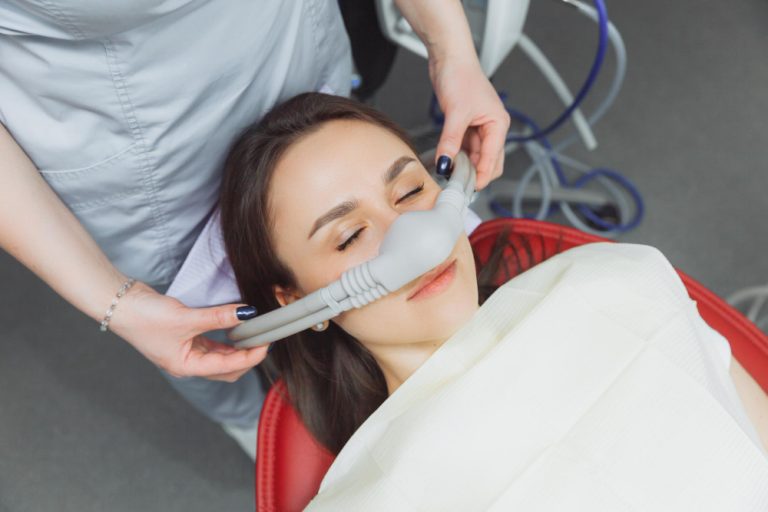
“Heart condition” covers an enormous range, and the range is the point. Well-controlled high blood pressure and a heart attack three weeks ago are not the same conversation. If your pressure is controlled, your rhythm is stable, and you can climb a flight of stairs without stopping, sedation in a properly equipped dental office is usually reasonable — and nitrous oxide is especially well tolerated, since it leaves no sedative hangover and delivers supplemental oxygen while it works.
What does change:
- Baseline numbers become gatekeepers. I take your blood pressure before we start as a decision point, not a ritual. There are readings above which I reschedule, and I would rather have that conversation at nine in the morning than halfway through a crown.
- Recent events reset the clock. A heart attack, new stent, bypass, new arrhythmia, or hospital admission in the last six months moves elective sedation back until your cardiologist says the picture is stable. Urgent infections are handled differently, with the cardiologist in the loop, because a spreading infection is its own cardiac risk.
- The local anaesthetic gets a second thought. Most dental anaesthetics contain a little adrenaline, which is what makes them last. For most cardiac patients that amount is unremarkable and far safer than inadequate anaesthesia, which produces its own adrenaline surge. For specific conditions I reduce it or choose a formulation without it.
- Blood thinners get coordinated, never stopped unilaterally. The short version, covered properly in my post on medications before sedation: do not stop them on your own.
- Appointment design changes. Shorter visits, morning slots, a more upright chair. For a long treatment list, sedation is sometimes what makes it possible to combine several procedures into fewer visits — which for a cardiac patient can be the lower-risk route, not the higher one.
There is also a reason to care about your heart beyond sedation safety, and it runs in the direction people do not expect. The American Heart Association lists “Poor dental health or gum disease” among the risk factors for infective endocarditis, and names “Maintaining good oral health” and “Getting regular dental care” as ways to lower that risk. I have written at length on what the research does and does not show about gum disease and heart disease. The practical consequence: avoiding the dentist is not a neutral choice for a cardiac patient, and sedation that gets you treated is a cardiovascular intervention of sorts.
Antibiotics before dental work: a shorter list than most people expect
Almost every patient who mentions a heart condition asks whether they need an antibiotic first, usually because they were told so once, years ago, and have carried the instruction forward ever since. The list is narrower than it used to be. Current American Dental Association guidance, following the American Heart Association criteria, is that prophylaxis “should be recommended only for patients with underlying cardiac conditions associated with the highest risk of adverse outcome”: prosthetic heart valves, including transcatheter-implanted ones; prosthetic material used in valve repair, such as annuloplasty rings; a previous episode of infective endocarditis; a heart transplant with valve regurgitation from a structurally abnormal valve; unrepaired cyanotic congenital heart disease; and repaired congenital defects with residual shunting or regurgitation near prosthetic material. Where it applies, it covers “all dental procedures that involve manipulation of gingival tissue or the periapical region of teeth” and procedures that perforate the oral mucosa.
What is not on that list: a stent, a pacemaker, a bypass, high blood pressure, a murmur on its own, atrial fibrillation, or a previous heart attack. Many patients in those groups have taken an unnecessary antibiotic before every cleaning for a decade. Bring the name of your specific cardiac condition — not just the word “heart” — and we will check it against the current criteria together. If you carry the AHA wallet card, bring that too.
One caveat: this is the prophylaxis question — preventing infection in your heart from routine dental work — not the question of treating an infection you already have. Facial swelling with a fever is not a prophylaxis conversation, it is an urgent one.
Diabetes: the fasting window nobody plans around
With diabetes, the sedation is the easy part. Intravenous and oral sedation both require a period without food beforehand, and for someone whose blood sugar depends on eating to a schedule, that instruction is the entire problem. I have watched an appointment come apart not because of the sedative but because a patient fasted from the night before, took their usual morning medication out of habit, and arrived shaky and sweating. So the plan is built backwards from the fast:
- First appointment of the day, almost always. It shortens the fast and keeps you away from the long afternoon wait that makes everything harder.
- Medication timing is your prescriber’s call — not mine, and not the internet’s. Insulin and the various oral diabetes medications behave very differently during a fast. This is one of the clearest reasons I write to physicians.
- We check your blood sugar before we start. Bring your meter or sensor. There are numbers below which I will not sedate you, and I would rather find them in the first five minutes.
- Fast-acting sugar is in the room. Always. Low blood sugar is harder to spot under sedation because its early signs — shakiness, confusion, anxiety — look a great deal like the sedation itself. That is the real clinical risk here, and it is managed by anticipating it rather than reacting.
- Healing is factored into the plan. Elevated blood sugar slows soft tissue healing and raises infection risk, so for poorly controlled diabetes I stage treatment rather than doing everything in one long visit.
None of that makes diabetes a contraindication. It makes it a scheduling and communication problem, which is a much better class of problem to have.
Blood sugar, gum disease, and why your mouth is part of your diabetes care
While we are here, the more important point about diabetes has nothing to do with sedation. Your mouth and your blood sugar sit in a feedback loop, and most people with diabetes have never been told the loop runs both ways.
The American Dental Association’s MouthHealthy puts it about as plainly as it can be put. “Periodontal disease is the most common dental concern for people living with diabetes,” and “Poor blood sugar control raises risks for gum problems, especially as we age.” That is the direction everyone knows. Then comes the half that surprises people: “serious gum disease can cause blood sugar to rise, making diabetes even harder to control.” And the consequence — “Research suggests that treating gum disease can help improve blood sugar control,” and “Having deep cleanings in your dentist’s office can actually help reduce your HbA1c.”
Read that last sentence again, because it reframes everything above it. For a person with diabetes a dental appointment is part of metabolic care, with a number attached. Which means that if dental fear has kept you out of the chair for three years, the sedation conversation is not an indulgence — it is the thing standing between you and a measurable improvement in your diabetes control. The same inflammatory logic shows up elsewhere: it is why I have written about gum inflammation and rheumatoid arthritis travelling together, and why a professional cleaning is a different procedure in clinical terms than anything you can do at home with a brush. One mouth, one bloodstream, one patient.
Sleep apnea: the airway is the entire conversation
Sleep apnea is where I am most careful, for a reason that is simple and mechanical. Obstructive sleep apnea means your airway collapses when the muscles holding it open relax. Sedation relaxes exactly those muscles. The two interact directly, which is not true of diabetes and only indirectly true of most cardiac disease.
Which is why monitoring matters more here than anywhere else. The ADA’s guidelines require, during moderate sedation, that “Oxygen saturation must be evaluated by pulse oximetry continuously,” that “The dentist must observe chest excursions continually,” and that the dentist “must monitor ventilation and/or breathing by monitoring end-tidal CO2.” That last measure is the one that matters for an apnea patient — carbon dioxide tells you someone has stopped moving air before oxygen saturation does, which buys you the minute you need. If you have sleep apnea and are considering sedation anywhere, ask whether the office uses capnography. It is a fair question and a short one.
- I favour lighter sedation. Nitrous oxide keeps you awake, keeps your protective reflexes intact, and delivers oxygen throughout. The trade-offs between nitrous, oral, and intravenous sedation shift noticeably once an airway is part of the picture.
- Bring the machine. If you use CPAP, bring it with your pressure setting. There are recovery scenarios in which it is used, and at minimum it tells me how severe your apnea is and how well it is managed.
- Position and appointment length change. A flat chair is an airway’s worst position. We sit you up more, work in shorter blocks, and supervise recovery longer than you might expect.
- Untreated apnea is a different risk than treated apnea. Diagnosed and using your machine puts you in a far better position than snoring heavily, waking unrested, and never having been studied. If you are in the second group I will usually want you assessed first. I also look for the dental fingerprints — flattened wear on the back teeth, a scalloped tongue, a cracked molar in a mouth with no decay — because clenching and sleep-disordered breathing travel together more often than patients realise.
What I do differently when a medical condition comes into the chair
- Before the day. Full history and medication list, ASA status assigned, physician consultation where the condition is significant, and a written plan for what we do if a number is out of range.
- In the room. Baseline vitals recorded rather than glanced at. Continuous pulse oximetry and capnography. Blood glucose checked where relevant. Fast-acting sugar, oxygen and emergency drugs within arm’s reach and in date. The lightest sedation that will get the treatment done — the goal is a completed appointment, not an unconscious patient.
- Recovery supervised properly. Longer observation, a responsible adult to take you home, and written aftercare that accounts for your condition — including what to eat and when, which for a diabetic patient is the most important sentence on the page.
One structural point, because it matters for a medically complex patient. Our associate periodontist performs surgical implant placement here; I plan the case, manage the restorative sequence, and deliver the final teeth. That division means the surgical and sedation decisions are made by the people best placed to make them, rather than by whoever happened to see you first.
When the honest answer is “not in this office, and not today”
I would not trust this post if it skipped this part. There are patients I decline to sedate here, and the decision is almost always about the setting rather than the person: a recent cardiac event or an unstable rhythm, where elective sedation waits for cardiology; severe untreated sleep apnea in someone who needs deep sedation rather than nitrous; poorly controlled diabetes with unpredictable swings, until there is a plan with their physician; significant obesity combined with a difficult airway; several substantial conditions stacked together, where the interaction rather than any single diagnosis is the concern; and blood pressure above my threshold on the day, which is a reschedule rather than a refusal.
What happens next is not that I send you away. The treatment gets done somewhere with an anaesthesiologist and a hospital’s resources, or here in smaller pieces with lighter sedation, or it waits six weeks while your physician adjusts something. A dentist who has never told anyone “not here” is not one with an unusually healthy patient list. They are one who has not drawn the line yet.
A composite patient scenario
The following is a composite patient scenario. It is not a real patient. It is assembled from the common features of many visits and contains no individual’s identifying details, in keeping with Florida Rule 64B5-.0011.
A man in his early sixties comes in with a broken lower molar. He has type 2 diabetes, takes medication for blood pressure, had a stent placed four years ago, and uses a CPAP machine most nights. He has not had a cleaning in about six years. In the first two minutes he tells me he knows he needs a lot of work and cannot sit through it awake — and then that he assumed his heart ruled sedation out entirely, which is why he had never asked.
Nothing on that list ruled it out. What it did was generate things to find out. His stent alone did not put him in a group needing antibiotic prophylaxis — he had been taking one before dental visits for years on an old instruction, and we checked it against the current criteria. I wrote to his cardiologist and his primary care physician with four specific questions. The cardiologist’s reply was two lines: stable, no restrictions, proceed. His physician gave me the morning medication instruction for his diabetes, which was not what he had been doing on his own. We booked the first slot of the morning, used nitrous oxide rather than intravenous sedation because of the apnea, kept the chair upright, checked his blood sugar before starting and once during, and kept juice on the counter. He asked afterwards why nobody had offered him this years ago. Nobody had asked him the right question, and he had not known there was one to ask.
What to do this week before your sedation appointment
- Write the list. Every diagnosis, every medication with its dose, your specialists’ names, and the date of anything significant in the last year. Photographing the labels is easier than writing them out.
- Find the two documents that matter. Your most recent sleep study, if you have had one, and your most recent HbA1c, if you are diabetic. Those two pieces of paper save more time than anything else you could bring.
- Say the condition when you book, not when you arrive. A physician letter takes days; an appointment that discovers it needed one takes a cancellation.
- Know your CPAP pressure setting if you use one, and plan to bring the machine.
- Ask us two questions. Does the office use capnography during sedation, and who is monitoring you while the dentist is working. A good answer comes quickly.
- Arrange the ride home before the day, for anything beyond nitrous oxide.
If you are anywhere from mildly uneasy to genuinely unable to walk through the door, my guide to dental anxiety and sedation was written for that, and our sedation dentistry page sets out what we offer.
Seven questions about dental sedation with a medical condition
Can I have dental sedation if I have a heart condition?
In most cases yes, provided the condition is stable and the planning is done first. Controlled blood pressure, a stable rhythm, an old stent or a bypass some years ago are not generally barriers to sedation in a properly equipped dental office, and nitrous oxide is particularly well tolerated because it delivers supplemental oxygen and leaves your reflexes intact. What changes is that baseline blood pressure becomes a decision point, appointments are kept shorter and earlier, the adrenaline content of the local anaesthetic is reconsidered, and blood thinners are coordinated with your prescriber rather than stopped. A cardiac event, new stent, new arrhythmia or hospital admission within the last six months moves elective sedation back until your cardiologist confirms the picture is stable.
Do I need medical clearance from my doctor before dental sedation?
It depends on how significant your condition is. The American Dental Association’s sedation guidelines require every patient to be evaluated before any sedative is given, and state that patients with significant medical considerations should also require consultation with their primary care physician. A healthy patient, or one with a well-controlled minor condition, usually needs no letter; a patient with substantial ongoing disease does. What I ask the physician is narrow: is the condition controlled now, has anything changed in six months, are there thresholds I should not work outside, and is any drug class best avoided. Allow several days for a reply, which is why the condition needs mentioning when you book rather than when you arrive.
Is dental sedation safe if I have diabetes?
Yes, and the sedative itself is rarely the difficult part — the fasting window before it is. Going without food while taking your usual medication is what produces trouble, so a diabetic sedation appointment is designed backwards from that: the first slot of the morning to keep the fast short, medication timing confirmed by your prescriber, blood sugar checked before we start, and fast-acting sugar in the room throughout. Low blood sugar is the genuine clinical risk, because its early signs of shakiness, confusion and anxiety closely resemble the effects of sedation itself, so it is managed by anticipating it rather than spotting it. Where blood sugar is poorly controlled, treatment is often staged rather than done in one long visit.
Do I take my insulin or diabetes medication before dental sedation?
That instruction has to come from whoever prescribes it, not from your dentist and not from general advice online. Insulin and the various classes of oral diabetes medication behave very differently during a fast, and the right answer depends on your specific regimen, your usual doses and how early your appointment is. This is one of the clearest reasons I write to a patient’s physician before booking sedation. What you should not do is take your normal morning dose out of habit after fasting from the night before, which is the most common way a well-planned appointment comes apart. Bring your meter or sensor so we can confirm where you actually are before anything begins.
Can I be sedated if I have sleep apnea and use a CPAP machine?
Usually yes, and being diagnosed and treated puts you in a better position than someone who snores heavily and has never been studied. Bring the machine and know your pressure setting, because it tells your dentist how severe the apnea is and how well it is controlled, and because there are recovery scenarios in which it is used. Sedation relaxes the same muscles that keep your airway open, so the plan shifts towards lighter sedation such as nitrous oxide, a more upright chair position, shorter working blocks and longer supervised recovery. Ask whether the office monitors end-tidal carbon dioxide, since capnography detects a pause in breathing before oxygen saturation falls. Severe untreated apnea combined with a need for deep sedation is best handled in a hospital or anaesthesiologist-staffed setting.
Do I need antibiotics before dental work if I have a heart condition?
Far fewer people do than believe they do. Current American Dental Association guidance, following the American Heart Association criteria, recommends prophylaxis only for patients with the cardiac conditions carrying the highest risk of an adverse outcome: prosthetic heart valves including transcatheter-implanted ones, prosthetic material used in valve repair, a previous episode of infective endocarditis, a heart transplant with valve regurgitation from a structurally abnormal valve, unrepaired cyanotic congenital heart disease, and repaired congenital defects with residual shunting or regurgitation near prosthetic material. A stent, a pacemaker, a bypass, high blood pressure, a murmur alone, atrial fibrillation and a past heart attack are not on that list. Bring the name of your specific condition so it can be checked against the current criteria rather than an old instruction.
What should I bring to a sedation appointment if I have a medical condition?
Bring a written list of every diagnosis and every medication with its dose, including inhalers, supplements and anything bought without a prescription, plus the names of your specialists and the dates of anything significant in the last year. If you are diabetic, bring your meter or sensor and your most recent HbA1c result. If you have sleep apnea, bring your CPAP machine, know its pressure setting, and bring your sleep study if you have a copy. If you carry an American Heart Association wallet card for antibiotic prophylaxis, bring that. Arrange a responsible adult to take you home for anything beyond nitrous oxide, and tell the office about the condition when you book rather than when you arrive.
Bring the conditions, not just the teeth
The patients I worry about are not the ones with complicated medical histories. They are the ones who decided on their own behalf that their history disqualified them, and then stopped coming. A heart condition, diabetes and sleep apnea are three of the commonest reasons people in Pompano Beach tell themselves they cannot be sedated, and all three are, in the ordinary case, reasons to plan rather than reasons to go without.
So bring the whole of you to the first appointment — the diagnoses, the medication list, the machine, the specialists’ names. It is not too much information and it does not make you a difficult patient. It makes you a patient I can plan for, and planning is the entire difference between a condition that complicates your dentistry and a condition that ends it.
We are at 572 E McNab Rd, Suite 102, Pompano Beach, FL 33060, and you can reach us at (954) 785-1100. Our hours are Monday 8:30 AM–12:30 PM, Tuesday 8:00 AM–5:00 PM, Wednesday 8:30 AM–12:30 PM, Thursday 9:30 AM–6:30 PM, and Friday 8:00 AM–5:00 PM. We are closed Saturday and Sunday. If you want to know more about how I work before you call, my background is here.
— Dr. Nicole M. Berger, DDS
Have a medical condition and want sedation planned properly?
Explore sedation dentistry Request an appointmentSources and further reading: American Dental Association, Guidelines for the Use of Sedation and General Anesthesia by Dentists; American Dental Association Oral Health Topics, Antibiotic Prophylaxis Prior to Dental Procedures; American Dental Association MouthHealthy, Diabetes and dental health; American Heart Association, Infective Endocarditis.
This article is general information from a Florida-licensed dentist and is not a diagnosis, a sedation plan, or a substitute for examination. Do not start, stop, or change any prescribed medication on the basis of this article. If you believe you are having a medical emergency, call 911.

Dr. Nicole M. Berger, DDS
Dr. Berger has cared for patients in Pompano Beach for over two decades at South Florida Smile Spa, with a focus on cosmetic dentistry, implants and reconstruction, and sedation options for anxious patients.