

Medications Before Dental Sedation: What I Need to Know First
Quick answer
Which medications matter before dental sedation? Most of them continue as normal, but I need the complete list before your appointment, not on the morning of it. Nearly all daily prescriptions continue as normal, usually with a small sip of water. The ones that change the plan are GLP-1 medications such as Ozempic or Mounjaro (which slow stomach emptying), blood thinners (which almost never get stopped, but do change how I sequence the visit), anything sedating, and diabetes medication while you are fasting. Bring the actual bottles or a printed pharmacy list, and include supplements and herbals.
Why I ask about your medications before dental sedation
Every new patient at South Florida Smile Spa fills out a health history, and somewhere on page two there is a box asking you to list your medications. Most people write down two or three, add “vitamins,” and move on. I read that box more carefully than almost anything else on the form.
Here is the honest reason. When I sedate someone, I am not just doing dentistry anymore. I am managing a person’s airway, blood pressure, heart rate and level of consciousness for the next hour or two, and every drug already in that bloodstream is part of the equation. Some make sedation deeper than I intended. Some make it shallower. A few change what your stomach is doing, which matters more than most people realise. A handful change how your gums bleed or how your jawbone heals afterwards.
None of this is a reason to be nervous. It is a reason to be thorough. In almost every case the answer is “yes, keep taking it, and here is the small adjustment we will make.” What I cannot do is make that call about a medication I do not know you are taking.
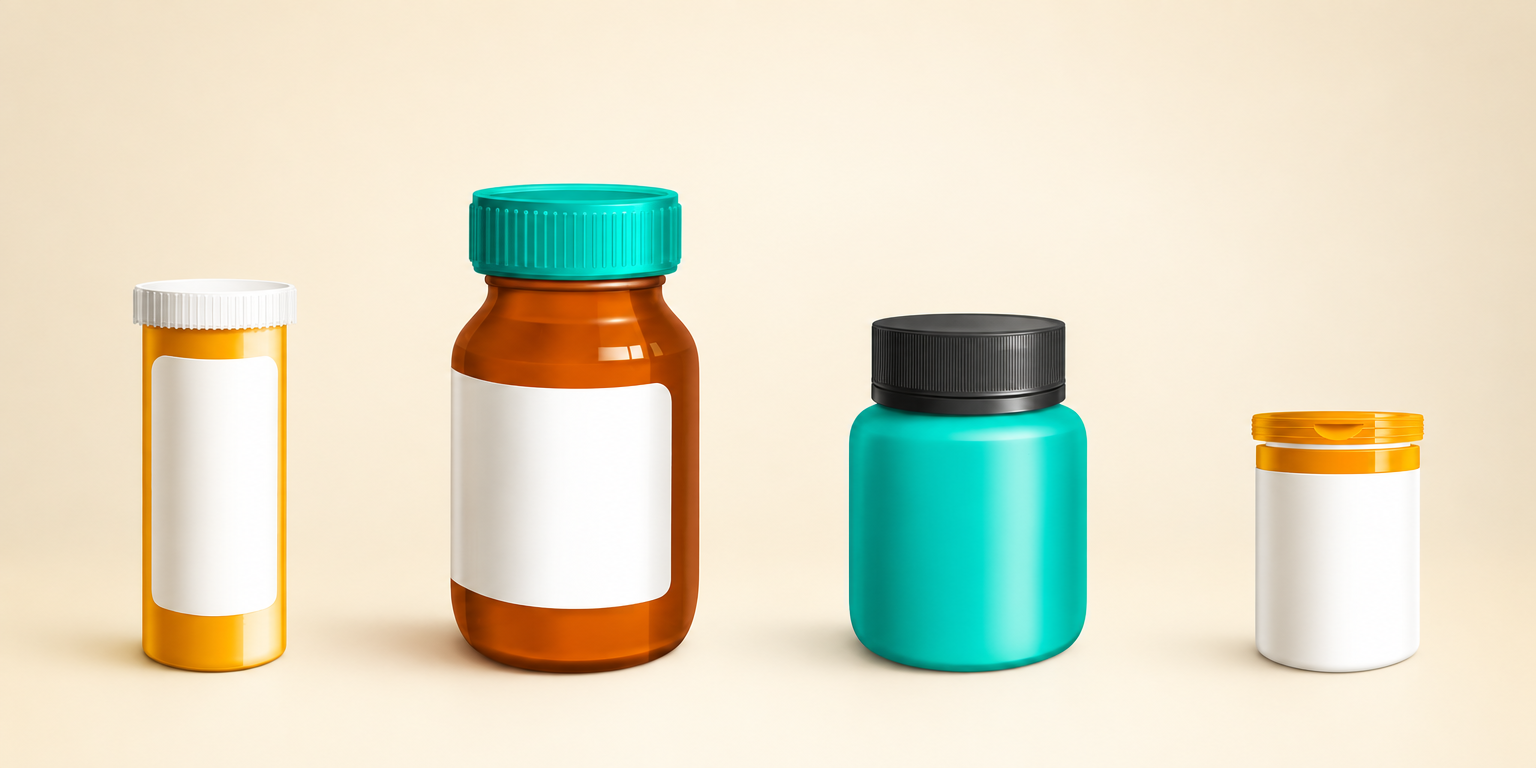
So: bring the bottles. Not a list typed from memory at a red light, and not “the little white one for my heart.” The actual bottles, a photo of the labels, or the printed medication list your pharmacy will give you for free if you ask at the counter. Include what people do not think of as medications — the patch, the inhaler, the weekly injection, the gummy vitamin. I would rather read a boring list of fourteen things than discover the fifteenth halfway through your appointment.
Three kinds of sedation, three different medication conversations
I offer three levels of sedation, and the medication question gets heavier as you move up the scale.
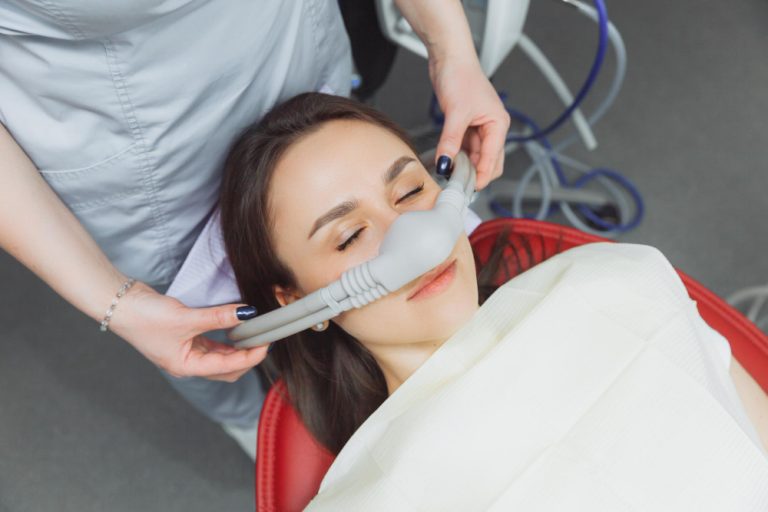
Nitrous oxide — laughing gas — is the lightest. You breathe it through a small nose piece, it works within minutes, and it leaves your system almost as fast as we turn it off. Because it is inhaled and short-acting, it interacts with very little. Even here I want to know about anything affecting your breathing or your ability to breathe comfortably through your nose.
Oral conscious sedation is a pill you take before your appointment. This is where medication history starts to matter in a concrete way, because the pill has to be swallowed, absorbed and metabolised by a liver that may already be busy processing several other things. The same dose behaves very differently in two people depending on what else they take.
IV sedation is the deepest level I provide. At South Florida Smile Spa I administer and monitor IV sedation personally, under Florida certification — the dentist doing the dentistry is the dentist watching your vitals. IV sedation is titrated, meaning I give a small amount, watch what your body does with it, and adjust. That control is exactly why a complete medication list matters: it tells me where to start and what to watch for.
If sedation itself is new to you, our sedation dentistry and dental anxiety guide walks through what each option actually feels like.
GLP-1 medications: the newest question in my operatory
Three years ago nobody asked me about this. Now it comes up most weeks.
If you take semaglutide, tirzepatide, dulaglutide or liraglutide — the brand names people recognise are Ozempic, Wegovy, Mounjaro, Zepbound, Trulicity and Victoza — I need to know, and I need to know your dose and the day of the week you take it.
The reason is mechanical rather than chemical. This class of medication slows how quickly the stomach empties — that is part of how it works. But sedation relaxes the reflexes that normally keep stomach contents where they belong, so a stomach that still holds food after a standard overnight fast is a genuine safety consideration.
The guidance has settled down considerably. In October 2024, five medical societies — including the American Society of Anesthesiologists and the American Gastroenterological Association — published joint clinical practice guidance on this exact question, and the headline is reassuring: most patients should continue taking their GLP-1 medication before an elective procedure. The blanket “stop it for a week” advice that circulated in 2023 was replaced by an individualised approach.
What the 2024 guidance does recommend is that higher-risk patients — higher doses, recent dose escalation, or ongoing gastrointestinal symptoms — follow a liquid-only diet for 24 hours before the procedure, which empties the stomach more reliably than fasting alone. Anyone with nausea, vomiting, abdominal pain, bloating or constipation on the day should wait until those symptoms resolve.
For a routine filling with nitrous oxide, none of this changes anything. For IV sedation it changes the conversation completely — and I would much rather have that conversation a week out than at 7:45 on the morning of your appointment. Please do not stop a GLP-1 medication on your own either; that decision belongs to you and your prescribing physician, and I am glad to make the call with them.
Blood thinners: please do not stop them on your own
This is the one I feel most strongly about, because the instinct is so understandable and so often wrong. Someone on warfarin, apixaban, rivaroxaban, clopidogrel or daily aspirin learns they are having a tooth removed, reasons that thinner blood means more bleeding, and quietly skips a few doses to be safe. They arrive proud of having thought ahead.
The American Dental Association’s position is direct: for most patients it is unnecessary to alter anticoagulation or antiplatelet therapy before dental treatment, and any change should be made in consultation with the prescribing physician — not by the patient, and not by me acting alone. The arithmetic is simple. Bleeding in the mouth is visible, local and manageable with pressure, sutures and haemostatic materials I keep in the operatory for exactly this. A clot or a stroke is none of those things.
So tell me you are on a blood thinner, tell me the dose, and tell me when your levels were last checked if you are on warfarin. Then let me plan around it — an earlier appointment, work staged across two visits, or a little longer in the chair afterwards to be sure everything has settled. What it very rarely means is stopping your medication.
Anxiety medication, antidepressants and daily benzodiazepines
A great many of the people I sedate are already taking something for anxiety, depression or sleep. That is not a barrier. It is information.
If you take a benzodiazepine daily — alprazolam, lorazepam, clonazepam, diazepam — your body has almost certainly developed some tolerance to that whole family of drugs. Oral conscious sedation uses a close cousin of what you already take. A dose that would comfortably sedate someone who has never taken one may do very little for you. I would rather know that in advance and plan accordingly than watch you sit wide awake through a sedation appointment wondering why it is not working.
The opposite problem exists too. Some people take an occasional anxiety tablet on the morning of a sedation appointment, on top of what I am about to give them, because they are nervous about the sedation itself. I understand the logic completely, and it is genuinely unsafe — two sedatives stacked without my knowledge is exactly what the pre-appointment instructions exist to prevent. If you want something to take the edge off, ask me first.
Antidepressants generally continue without interruption; SSRIs and SNRIs rarely cause problems with dental sedation. Older tricyclics and MAO inhibitors are less common now but matter more, mainly because of how they interact with the adrenaline in local anaesthetic. Lithium, antipsychotics and mood stabilisers belong on the list too.
The additive group: opioids, muscle relaxants, sleep aids, alcohol and cannabis
Everything in this paragraph does roughly the same thing sedation does: it slows the central nervous system. Stack enough of them and the effect is not additive, it is multiplied.
That includes prescription opioids, muscle relaxants such as cyclobenzaprine or baclofen, prescription sleep medications, sedating antihistamines, and — the two most often left off the form — alcohol and cannabis.
I am not asking about those two to judge anyone. I am asking because both genuinely change sedation. Regular cannabis use tends to raise the amount of sedative required, sometimes substantially, and smoking anything is relevant to how your airway behaves. Regular alcohol use does something similar, and alcohol the night before is a bad idea regardless, because it is still being cleared while I am trying to sedate you predictably.
Tell me honestly. I have heard all of it, it stays in your chart, and it makes your appointment safer.
Heart, blood pressure and diabetes medications on the morning of your visit
The general rule for blood pressure and heart medication is take it as normal, with a small sip of water, even when you have been told not to eat or drink before sedation. Skipping a beta blocker or an antihypertensive on the morning of a procedure is a good way to arrive with a blood pressure reading that delays everything. I will confirm this specifically with you when we book, because the instruction differs slightly depending on what you are taking.
Diabetes medication is the genuine exception, and it needs a proper conversation rather than a rule of thumb. If you are fasting for sedation and take insulin or another glucose-lowering drug, the dose almost always needs adjusting — and that adjustment belongs to your physician or endocrinologist, with me scheduling around it. My strong preference is to put diabetic patients early in the morning so the fast is short and you can eat soon afterwards. Bring your monitor if you use one. If your blood sugar is low when you arrive, we stop, we treat that, and we reschedule if we need to.
Bone-density medications and your jaw
If you take alendronate, risedronate, ibandronate, zoledronic acid or denosumab — medications for osteoporosis, and a related group used in some cancer care — this belongs on your list even though it has nothing to do with sedation itself.
These medications change how bone remodels, including the bone of your jaw, which matters when a tooth has to come out or when bone has to heal around an implant. The condition we watch for is medication-related osteonecrosis of the jaw.
Here is the part worth reading twice, because the internet makes it sound far more alarming than the evidence supports. At ordinary osteoporosis doses, the ADA puts the highest reliable estimate of MRONJ prevalence at roughly 0.10%, and notes that the risk of an osteoporosis-related fracture substantially outweighs that low risk. The ADA also states plainly that there is insufficient evidence to recommend a drug holiday or a waiting period before dental treatment — stopping may not reduce the risk and may well harm your bones.
What does help is unglamorous: keeping your mouth healthy so extractions are needed less often. If you are about to start one of these medications, it is an excellent moment to finish outstanding dental work. If you have been on one for years, it is an excellent reason to keep your cleanings.
The list people forget: supplements, herbals and grapefruit
Almost nobody writes these down, and a few of them matter.
Fish oil, vitamin E, ginkgo, ginger and high-dose turmeric all have mild blood-thinning effects — trivial on their own, worth knowing about alongside a prescription anticoagulant and an extraction.
St John’s wort is the significant one. It speeds up the liver enzyme system that clears several sedatives, which can make oral sedation noticeably weaker than expected.
Kava, valerian and melatonin add their own sedative effect on top of mine.
Grapefruit and grapefruit juice do the reverse of St John’s wort — they block the same liver enzyme, so an oral sedative can hit harder and last longer than intended. If you are having oral conscious sedation, skip the grapefruit for a day or two beforehand.
None of these mean you have to stop anything. They mean I adjust.
What your medication list tells me about your mouth, sedation or not
Here is the part of this conversation that outlives your sedation appointment, and it is the reason I would want your medication list even if you were never sedated at all.
Hundreds of common medications reduce saliva. Blood pressure medication, antidepressants, antihistamines, diuretics, bladder medication, some inhalers, a great deal of what a person over sixty takes daily. The American Dental Association’s MouthHealthy guidance on medications and oral health puts the mechanism simply: saliva helps keep food from collecting around your teeth and neutralises the acids produced by plaque. Take that away and you have changed the chemistry of the entire mouth.
This is why I sometimes see a patient who has flossed diligently for forty years suddenly develop three cavities in a year, usually right at the gumline. Nothing about their habits changed. Their prescriptions did.
The same list tells me other things. An inhaler used without rinsing afterwards predicts oral thrush. Uncontrolled blood sugar predicts gum disease that resists treatment — a relationship that runs in both directions, as I have written about in the context of gum disease and heart disease. Certain medications are associated with nocturnal clenching and grinding, which shows up as cracked cusps and worn enamel.
Your mouth is not a separate system that happens to sit in your head. It is the one part of your body I can see without imaging, and your medication list is the context that makes what I see mean something.
A composite case: the same medication list, two very different mornings
The following is a composite scenario. It is not a specific patient. Details have been combined from multiple cases to illustrate a clinical point, in keeping with Florida Rule 64B5-.0011.
Two people in their late fifties, both needing several hours of restorative work under IV sedation, both taking almost exactly the same things: a blood pressure medication, a statin, metformin, a weekly GLP-1 injection, apixaban after an episode of atrial fibrillation, and fish oil.
The first brings the bottles to a consultation two weeks out. I see the GLP-1 dose was increased three weeks ago and that she has been queasy in the mornings since, so we plan a clear-liquid day beforehand and I ask her prescribing physician to weigh in. Her cardiologist confirms the apixaban continues, and I stage the work so the surgical portion happens first, while I have the most time to manage bleeding. She takes her blood pressure tablet at six with a sip of water, holds the metformin on her endocrinologist’s instruction, and arrives at eight. The appointment runs long but runs exactly as planned.
The second fills in the form in the waiting room on the morning and writes “BP pill, cholesterol, diabetes, blood thinner, shot for weight loss.” He is not being difficult — this is how most of us describe our own medications. But I do not know which anticoagulant, I do not know the GLP-1 dose or when he last took it, and when I ask about the last day he mentions he has felt full since dinner. I cannot safely proceed with deep sedation on that. We reschedule, he calls his pharmacy, and we do it properly nine days later.
Same profile, same treatment, same outcome in the end. The difference was a phone call and a paper bag of prescription bottles.
Your pre-sedation checklist — and what to do this week
Before any sedation appointment at our office:
- Get a printed medication list from your pharmacy. Free, two minutes at the counter, and more accurate than any of us are from memory.
- Add everything the pharmacy does not know about — supplements, vitamins, herbals, anything prescribed elsewhere or bought abroad, cannabis in any form.
- Tell us at booking, not at check-in. A question that takes five minutes a week out can cost a rescheduled appointment on the day.
- Ask which medications to take on the morning of your visit. The answer is usually “most of them, with a sip of water” — but the exceptions matter.
- Follow the fasting instructions exactly, including any liquid-diet instruction we give you.
- Arrange your ride. Anyone having oral or IV sedation needs a responsible adult to drive them home.
- Call us if anything changes — a new prescription, a dose change, stomach upset, a hospital visit.
And if you are reading this because you have been putting off treatment you know you need — a crown that keeps being postponed, a tooth that may or may not be savable, or a mouth that needs rebuilding in stages — the medication conversation is not the obstacle. It is how we make the appointment safe enough to happen.
Seven questions about medications before dental sedation
Do I need to stop taking Ozempic or Wegovy before dental sedation?
Usually no. The October 2024 multisociety guidance from the American Society of Anesthesiologists and four partner organisations concluded that most patients should continue their GLP-1 medication before an elective procedure. What may change is your preparation: on a higher dose, after a recent dose increase, or with gastrointestinal symptoms, a clear-liquid diet for 24 hours beforehand is recommended. If you have nausea, vomiting, abdominal pain or bloating on the day, we postpone. Never stop a prescribed medication on your own — tell me the drug, the dose and the day you take it, and I will coordinate with your physician.
Should I stop my blood thinner before a dental procedure?
Almost certainly not, and please do not do it on your own. The American Dental Association’s position is that for most patients it is unnecessary to alter anticoagulant or antiplatelet therapy before dental treatment, and any change should be made in consultation with the prescribing physician. Bleeding in the mouth is local and controllable with pressure, sutures and haemostatic materials. A clot or a stroke is not. Tell me which thinner you take and when your levels were last checked, and I will plan around it.
Can I take my regular anxiety medication the morning of sedation?
Ask me first. If you take a benzodiazepine daily, I need to know, because tolerance may mean a standard oral sedation dose does very little for you. And if you are thinking of taking an extra tablet because the sedation itself makes you nervous, that is the situation I most want to prevent — two sedatives stacked without my knowledge is genuinely unsafe. Call us and I will tell you what is safe alongside the plan.
What medications should I avoid the night before dental sedation?
Alcohol and cannabis, which both add to the sedative effect and change how predictably I can dose you. Any sedative or sleep aid I have not specifically approved. And grapefruit or grapefruit juice if you are having oral conscious sedation, because grapefruit blocks the liver enzyme that clears the sedative and can make it hit harder and last longer than intended. Everything else, including most daily prescriptions, generally continues as normal unless we tell you otherwise.
Do I still take my blood pressure pill on the morning of my appointment?
In most cases yes, with a small sip of water, even while fasting for sedation. Skipping a beta blocker or an antihypertensive is a common reason a blood pressure reading delays an appointment. Diabetes medication is the real exception — if you are fasting and take insulin or another glucose-lowering drug, the dose usually needs adjusting by your physician, and I will book you early so the fast is short. We confirm this with you specifically when we schedule.
Do vitamins and herbal supplements really matter before sedation?
Some do. Fish oil, vitamin E, ginkgo, ginger and high-dose turmeric have mild blood-thinning effects worth knowing about before an extraction. St John’s wort speeds up the liver enzymes that clear several sedatives, which can make oral sedation noticeably weaker than expected. Kava, valerian and melatonin add sedation of their own. None of this means you must stop anything — it means I adjust the plan. Write them down.
What if I forget to mention a medication until I am already in the chair?
Tell me anyway, immediately, even if we have already started. There is no version of this where you get in trouble, and several where it changes what I do next. Depending on the medication we may carry on unchanged, adjust the sedation, or stop and reschedule. Rescheduling is a mild inconvenience. Sedating someone on incomplete information is not something I am willing to do.
Bring the whole list
I have never once thought less of a patient for the contents of their medication list. What I have thought, more times than I can count, is how much easier the appointment became because someone took two minutes at the pharmacy counter.
Sedation is what lets people who have avoided dentistry for years finish a decade of postponed work in a single morning. It is the most useful thing I offer to the most anxious people I see, and the medication conversation is not an obstacle to that — it is what makes it safe.
Bring the bottles. Tell me about the weekly injection, the supplement your neighbour recommended, and the glass of wine on Saturday. Then let me do the worrying.
Talk to us about sedation before your next appointment
Bring your medication list and we will build the visit around it. Dr. Nicole M. Berger, DDS administers and monitors IV sedation personally, under Florida certification.
Or call (954) 785-1100 · 572 E McNab Rd, Suite 102, Pompano Beach, FL 33060

Dr. Nicole M. Berger, DDS
Dr. Berger has cared for patients in Pompano Beach for over two decades at South Florida Smile Spa, with a focus on cosmetic dentistry, implants and reconstruction, and sedation options for anxious patients.