

TMJ and Jaw Pain in Pompano Beach: What Actually Helps — and What to Try First
By Dr. Nicole M. Berger, DDS — South Florida Smile Spa, Pompano Beach
Quick answer
Most jaw pain is muscular, not structural: the joint is usually fine and the muscles that move it are overworked from clenching. Painless jaw clicking is normal. Most patients improve with reversible care — habit awareness, physical therapy and a professionally fitted night guard — not with irreversible bite treatment.
Botulinum toxin is off-label for TMD and is not a first-line treatment. TMD affects roughly 5% of U.S. adults and is about twice as common in women.
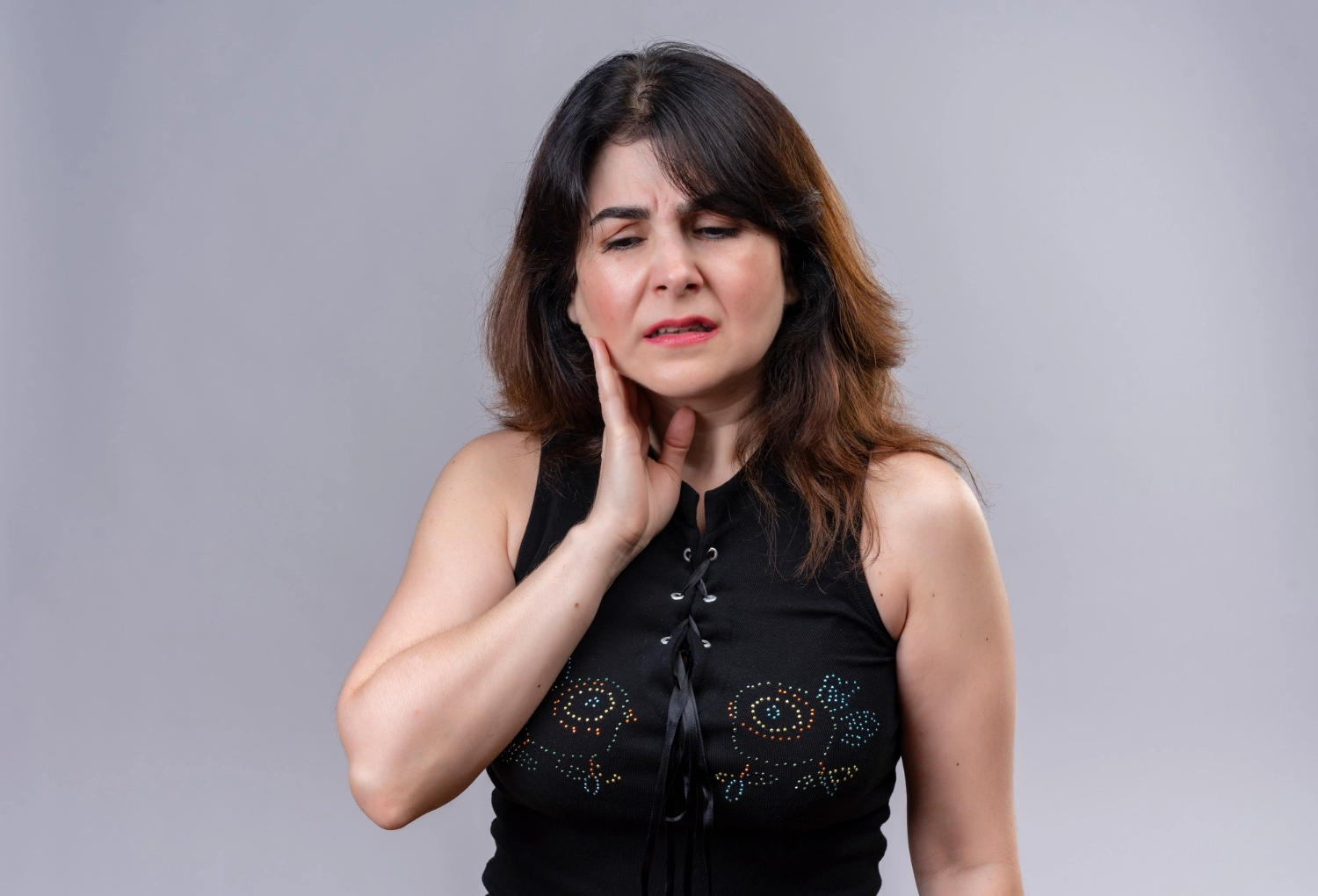
Patients come to me holding the side of their face. They have usually already been to a physician, sometimes to an ENT, occasionally to a neurologist. They have been told it is stress, or sinuses, or that they should “try to relax.” Many of them have been searching online and have landed on the same conclusion: I need Botox for my TMJ.
Sometimes they are right. Often they are not — not yet, anyway. And the gap between those two answers is where most of the bad advice on the internet lives.
Here is how I approach TMJ treatment in Pompano Beach — what I actually tell patients about jaw pain, in the order I tell them.
What TMD actually is
The temporomandibular joint is the hinge that connects your lower jaw to your skull, just in front of each ear. It is one of the most-used joints in your body — you move it every time you speak, chew, swallow, or yawn.
“TMJ” is the joint. “TMD” — temporomandibular disorder — is the condition. People use them interchangeably, and that is fine in conversation, but the distinction matters when you are searching for information, because TMD is not one disease. It is an umbrella term covering problems in the joint itself, problems in the muscles that move it, or both at once.
That last point drives almost everything else in this article. Most jaw pain I see is muscular, not structural. The joint is fine. The muscles that operate it are overworked, and they are overworked because of clenching and grinding the patient often does not know they do.
According to the National Institute of Dental and Craniofacial Research, TMD affects roughly 5% of U.S. adults, and it is about twice as common in women as in men — most concentrated in women between 35 and 44.
The symptoms that matter — and the one that usually doesn’t
Symptoms worth having evaluated:
- Aching pain in the jaw, in front of the ear, or in the cheek muscles
- Pain that is worse in the morning, which usually points to night-time clenching
- Headaches concentrated in the temples
- Jaw stiffness, or a jaw that feels tired after a meal
- Limited opening — difficulty getting a fork or a toothbrush in comfortably
- A jaw that locks, catches, or deviates to one side when you open
- Tooth pain with no cavity to explain it
And then there is the symptom that fills my schedule unnecessarily: clicking.
A jaw that clicks or pops but does not hurt is, in most cases, normal. NIDCR states this directly — sounds without pain in the joints do not need treatment. If your jaw has clicked for fifteen years and has never hurt, that is a mechanical quirk, not a disease. It does not need to be fixed, and anyone selling you a fix for it should be questioned.
Pain is the signal. Noise, by itself, usually isn’t.
The myth I correct most often: “my bite caused this”
This one is worth its own section, because patients are told it constantly.
The belief that a “bad bite” causes TMD — and that grinding down teeth, doing full-mouth orthodontics, or permanently reshaping your bite will cure it — is not supported by current evidence. NIDCR is unambiguous: there is insufficient evidence that occlusal treatments work for TMD, and in some cases they make the problem worse.
I want to be careful here, because this cuts against how some practices sell treatment. Adjusting a bite is irreversible. You cannot put enamel back. If someone proposes grinding your teeth, crowning multiple healthy teeth, or straightening your bite specifically to cure jaw pain, get a second opinion before anyone touches a handpiece.
That does not mean bite has nothing to do with anything — a genuinely traumatic bite relationship, a collapsed vertical dimension after years of wear, or teeth that are already broken down are real problems that deserve real treatment. But that is rebuilding worn or broken-down teeth for a structural reason, not a TMD cure being sold under a different name.
What causes it, honestly
For most patients, there is no single cause. Research points to a combination of genetics, stress and how an individual’s nervous system processes pain, injury, joint arthritis, and parafunctional habits — clenching, grinding, nail biting, chewing gum all day, holding a phone with your shoulder.
Clenching deserves special attention because it is so common and so invisible. In one large population study, roughly 15% of men and 20% of women reported bruxism. My clinical experience is that the real number is higher, because most people who clench at night have no idea they do it. They find out from a partner, or from me, when I see the wear.
TMJ treatment in Pompano Beach: what I try first
Nearly every patient starts here, because the conservative approach works for the majority and costs you nothing you can’t undo:
Rest the joint. Softer foods for a couple of weeks. No gum, no ice, no chewy candy, no biting into an apple whole. Cut food into smaller pieces.
Heat and cold. Moist heat on the muscles relaxes them. Cold helps an acutely inflamed joint. Both are safe to alternate.
Anti-inflammatories, if your physician says they are appropriate for you.
Habit awareness. Your teeth should not touch during the day except when you are eating. Most clenchers are shocked by how much daytime contact they have once they start noticing. Lips together, teeth apart, tongue at the roof of your mouth — that’s the resting position.
Physical therapy and stretching. A therapist who works with jaws is genuinely valuable here.
Stress and sleep. Jaw pain and poor sleep run together. So do jaw pain and anxiety. Addressing those is not a soft recommendation, it is treatment.
A custom night guard, when night-time grinding is the driver. Not a boil-and-bite from a pharmacy — an over-the-counter guard that fits poorly can shift teeth or make clenching worse. A properly fabricated guard protects your enamel and your restorations while the muscles calm down.
Most patients improve on this alone. Not all — and that brings us to the question everyone actually came here to ask. The American Dental Association’s MouthHealthy guidance on TMJ says the same thing I do: it endorses the NIDCR’s “less is often best” approach, which lets you try simple treatment before moving on to anything more involved.
Where Botox fits — and where it doesn’t
Dentists work in the muscles of facial expression and mastication every day. It is the anatomy of our entire field, which is why the profession has a legitimate place in this conversation at all — you can read more about why a dentist is trained to treat these muscles.
So this is not an argument against botulinum toxin. It is an argument against how it gets marketed. Three things every patient should know before consenting to it:
1. It is not FDA-approved for TMD. Botulinum toxin type A is approved for chronic migraine, among other indications, but its use for temporomandibular disorders is off-label. Off-label is legal and common throughout medicine — but you deserve to be told, and standardized injection protocols for TMD do not exist.
2. It is not a first-line treatment and not the standard of care. That is the explicit conclusion of the current management literature. It belongs after conservative therapy has been tried and has failed.
3. There are real long-term unknowns. Studies have raised concerns about loss of bone density in the jaw and structural changes in the injected muscles with repeated use, and there are no long-term prospective studies resolving the question. When a patient wants to repeat injections every few months indefinitely, that unknown is part of the conversation.
Where it does earn a place clinically: myogenous TMD that has genuinely not responded to conservative care, significant bruxism that persists despite a properly fitted night guard, and patients whose jaw pain travels with a headache disorder. In those situations the evidence for pain reduction is reasonable.
What should never happen is injecting a patient who has not yet tried a night guard.
When jaw pain is not TMD at all
Part of my job is ruling things out. Jaw and facial pain can come from a cracked tooth, an abscess, a sinus infection, a salivary gland problem, nerve pain, or arthritis in the joint. A cracked tooth in particular can mimic muscle pain almost perfectly, and cracks frequently do not show on a standard X-ray.
One warning that has nothing to do with dentistry: jaw pain that comes on with exertion, especially with chest discomfort, shortness of breath, nausea or sweating, can be a cardiac symptom — and it presents this way more often in women. That is an emergency room visit, not a dental appointment.
What clenching quietly does to your teeth
Even when the pain settles, the force does not stop. Over years, clenching produces flattened, shortened front teeth, chipped edges, vertical cracks, notches at the gumline, crowns and fillings that keep failing, and teeth that become sensitive with no decay present.
This is why I treat grinding as a whole-mouth issue rather than a jaw issue. Protecting teeth before they fracture is far simpler than rebuilding them afterward — and patients who have already lost significant structure are the ones who end up needing comprehensive work.
A patient I think about
The scenario below is a composite drawn from presentations common in this practice, not an account of an individual patient.
A woman in her early forties came in convinced she needed Botox. She had read about it, her friend had it, she wanted it. Her temples ached every morning, her jaw was tired by noon, and she had been to two physicians for headaches.
Her joints were quiet. Her muscles were rock-hard. Her lower front teeth were worn flat, and her sleep was, by her own description, terrible.
We made a night guard, worked on daytime posture and habit awareness, and she made a real change to her sleep routine. At eight weeks she told me the morning headaches were essentially gone.
She may still choose to explore botulinum toxin someday. But she would have committed to it — and to re-injecting indefinitely — for a problem that resolved with a guard and better sleep. That conversation is the reason I write posts like this one.
Frequently asked questions
Is TMJ the same thing as TMD?
TMJ is the joint itself. TMD is the disorder affecting it. Most people say “TMJ” when they mean “TMD,” and any dentist will understand you.
My jaw clicks. Do I need treatment?
If it clicks and does not hurt, most likely not. Painless joint sounds are common and are not considered a condition requiring treatment. If clicking comes with pain, locking, or limited opening, it should be evaluated.
Is Botox FDA-approved for TMJ?
No. Botulinum toxin is FDA-approved for several conditions including chronic migraine, but its use for temporomandibular disorders is off-label. It can still be an appropriate option for the right patient after conservative care has failed — you should simply be told what you are consenting to.
How long does Botox for jaw clenching last?
Effects typically fade over three to four months, so maintaining results means repeating treatment. That is a key reason to try conservative options first — a night guard does not wear off.
Can a night guard cure TMJ?
A guard does not cure the disorder, but it protects teeth from grinding forces and reduces muscle strain, which resolves symptoms for many patients. It should be professionally fitted; poorly fitting drugstore guards can worsen the problem.
Will braces or fixing my bite fix my jaw pain?
Current evidence does not support irreversible bite treatment as a TMD cure, and it can make symptoms worse. If someone proposes permanently altering your bite to treat jaw pain, get a second opinion first.
Can stress cause TMJ pain?
Stress does not cause the joint to fail, but it strongly drives clenching and grinding, and it changes how the nervous system processes pain. In practice, stress management is part of treatment for most patients.
When should I see a dentist about jaw pain?
If pain has lasted more than two weeks, if you cannot open comfortably, if the jaw locks, or if you are waking with headaches or a sore jaw. Sooner if you are seeing visible tooth wear or chipping.
Getting an answer instead of a guess
If your jaw hurts, you deserve a real evaluation before anyone recommends a procedure. When you come in, I examine the joints and the muscles individually, check your range of motion and the path your jaw travels when it opens, look for wear patterns and cracks on your teeth, and talk with you about sleep, stress, and habits. Then we start with what is reversible.
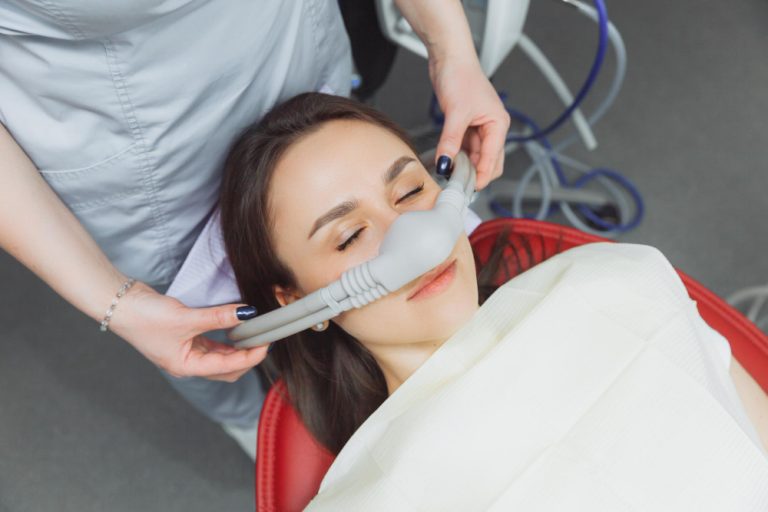
For patients whose anxiety makes dental visits difficult in the first place, we have options for that too — jaw pain should not go untreated because the appointment itself feels like too much.
You can read more about how we approach TMJ and TMD treatment at South Florida Smile Spa.
Jaw pain deserves an answer, not a guess
If your jaw hurts, clicks or wakes you up tired, come in for a real evaluation of the joints, the muscles and your teeth before anyone recommends a procedure. We start with what is reversible.
Or call (954) 785-1100 · 572 E McNab Rd, Suite 102, Pompano Beach, FL 33060 · Serving Fort Lauderdale, Deerfield Beach, Lighthouse Point and Coconut Creek
Dr. Nicole M. Berger, DDS practices cosmetic, restorative and implant dentistry in Pompano Beach, Florida. More about Dr. Berger.
This article is for general education and is not a substitute for an in-person examination and diagnosis.

Dr. Nicole M. Berger, DDS
Dr. Berger has cared for patients in Pompano Beach for over two decades at South Florida Smile Spa, with a focus on cosmetic dentistry, implants and reconstruction, and sedation options for anxious patients.