

Toothache at 2 A.M.: What Actually Helps Until the Office Opens
Quick answer
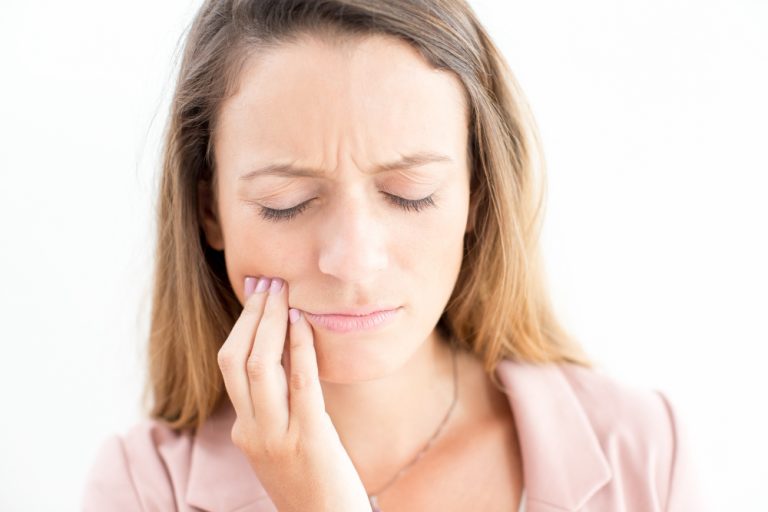
A toothache at night is almost always inflamed pulp inside the tooth, and lying down makes it worse because pressure in your head rises when it is level with your heart. Until the office opens: take an over-the-counter anti-inflammatory as directed on the label if it is appropriate for you, sleep propped up on two or three pillows, hold a cold compress against the outside of the cheek, rinse gently with warm salt water, and stop chewing on that side. Do not put aspirin, clove oil or a numbing gel on the tooth or gum. Go to an emergency room tonight instead of waiting if you have spreading facial swelling, swelling near the eye or under the jaw, trouble breathing or swallowing, a fever, or you feel generally unwell. Everything else can wait for morning, and should not wait longer than that.
The calls I get first thing in the morning are a particular kind of call. The voice is tired. Somebody has been awake since two or three, sitting up in a chair because the bed made it worse, counting the hours until we open. By the time they reach me they are not really asking what is wrong with the tooth. They are asking why nothing they tried worked, and whether they should have gone somewhere in the middle of the night.
So this is the answer I would have given at two in the morning if you had been able to reach me. None of it fixes the tooth — nothing you do at home fixes the tooth. But there is a real difference between a bad night and an unbearable one, and most of that difference comes down to five or six things people either do not know or have backwards.
Why a toothache always gets worse at night
People assume the night pain is psychological. There is a little of that, but it is mostly mechanical, and the mechanics are what make the advice below make sense.
The living tissue inside a tooth is called the pulp, and it sits in a hard chamber with no room to expand. When it becomes inflamed it swells like any other inflamed tissue — except your ankle can swell outward and a tooth cannot. The pressure has nowhere to go, so it presses on the nerve endings inside the chamber. That pressure is the pain.
Now lie down. Upright, your head sits above your heart and blood drains away with gravity’s help. Lying flat, it is level with your heart, venous return slows, and pressure in the small vessels of your head and face rises. In a tooth already at capacity, a small rise in pressure is a large rise in pain. That is why a dull ache at ten o’clock is impossible to ignore at two — and why the most useful thing I can tell you tonight has nothing to do with medication. Get your head up.
Nights are also worse because you have run out of whatever was quietly masking it all day, and because if you are a grinder, the clenching you do in your sleep is loading a tooth that is already screaming. I see that often enough that a toothache at night sometimes turns out to be bruxism doing damage you have not noticed yet rather than decay.
The four kinds of nighttime toothache, and which one cannot wait for morning
The distinction decides whether you are managing until morning or getting in a car now. When someone describes a toothache at night to me on the phone, I am sorting it into one of four buckets.
Reversible pulpitis. Sharp, brief pain that spikes with cold or sweet and stops within seconds. This is irritated pulp still healthy enough to recover — uncomfortable, not urgent, and often fixable with something far smaller than you are imagining.
Irreversible pulpitis. Deep, throbbing pain that lasts minutes after a trigger or arrives with no trigger at all. It often wakes you. Heat may make it worse and cold may actually relieve it — confusing, and a genuinely useful clue. This pulp is dying and will not recover. It needs treatment soon, but it is not a middle-of-the-night emergency in itself.
A cracked or fractured tooth. Pain on biting and, more tellingly, pain on release — the moment you let go and the crack flexes closed. A crack can be anything from a hairline you will never see to a tooth split to the root, and you cannot tell which from the outside. The detail is in my piece on what to do about a cracked tooth right now.
An abscess. Infection that has moved beyond the tooth into the bone and tissue around the root. There may be swelling, a bad taste, a tooth that feels taller or loose, pain on touching the gum, or a general sense of being unwell. This is the one bucket that can turn into a genuine emergency overnight — the reasons are in my piece on how a dental abscess behaves and when it becomes an emergency.
What actually helps between now and the morning
Get your head up and keep it up. Two or three pillows, or a recliner. Most people who try this are surprised how much of the throb it takes off, because it addresses the mechanism rather than masking it. If you have been lying flat taking painkillers with no result, this is very often the missing piece.
Take an over-the-counter anti-inflammatory, as directed on the label, if it is appropriate for you. Dental pain is inflammatory pain, which is why an anti-inflammatory tends to outperform a plain painkiller. The American Dental Association’s 2024 clinical practice guideline on acute dental pain recommends non-steroidal anti-inflammatory drugs, taken alone or along with acetaminophen, as “first-line treatments for managing short-term dental pain in adults and adolescents aged 12 or older.” The ADA’s patient-facing guidance is blunter: “medicines like ibuprofen and acetaminophen can safely and effectively relieve short-term dental pain.” For most dental pain that is not second best. It is the best available option.
What I will not do is follow that with a number, for the same reason the first thing my team asks you on the phone is for your medication list. Anti-inflammatories matter to your kidneys, your stomach lining and blood pressure that is already being managed, and they interact with blood thinners, lithium, methotrexate and some blood pressure medications.
Acetaminophen has a ceiling that hides inside combination cold and sleep products, and that ceiling is about your liver. That is not a reason to avoid these medicines. It is a reason the right amount is a conversation with a pharmacist, your physician, or the label on the box — not with a dentist writing in advance to an audience she cannot see.
Cold on the outside of the cheek, not on the tooth. A cold pack or frozen peas wrapped in a towel, twenty minutes on and twenty off, against the skin over the sore area. Cold against the face dulls the pain; ice held directly against a tooth with exposed dentine can set it off badly.
Rinse gently with warm salt water. Half a teaspoon of salt in a cup of warm water, swished gently and spat out. ADA MouthHealthy’s emergency guidance begins in the same place: “For toothaches, rinse the mouth with warm water to clean it out,” and “gently use dental floss to remove any food caught between the teeth.” A single popcorn hull wedged under the gum accounts for a surprising number of toothaches that vanish the moment it comes out.
Stop using that side. No chewing, nothing very hot or cold, nothing hard. If the tooth is cracked, every bite flexes the fracture wider.
Do not go looking for leftover antibiotics. They do nothing for inflamed pulp, and half a course of somebody else’s prescription is how resistant infections start. Opioids are not where the evidence points either: the same 2024 ADA guideline reserves them for “the limited circumstances in which they may be appropriate” and warns against “just in case” prescriptions.
Then call the moment we open. Not to be seen eventually — to be seen that day. We hold time for this. A toothache at night that has woken you is not a watch-and-wait situation.
What people try at two in the morning that makes it worse
Every one of these walks through my door, and some have done more damage than the original toothache.
Aspirin held against the tooth or gum. The oldest piece of bad dental advice in circulation, and the one I see most. Aspirin is an acid. Held against soft tissue it produces a chemical burn — a white, sloughing patch of dead gum that then hurts on its own, independently of the tooth, for a week or more. ADA MouthHealthy says it in nine words: “Do not put aspirin on the aching tooth or gum tissues.” Swallow it, if it is appropriate for you. Never park it.
Benzocaine gels used heavily and repeatedly. Numbing gels do very little for pain coming from inside a tooth, because the gel sits on the gum while the problem is in a sealed chamber underneath. Meanwhile the US Food and Drug Administration warns that oral benzocaine “can cause a condition in which the amount of oxygen carried through the blood is greatly reduced” — methemoglobinemia, which “can be life-threatening and result in death” — and says these products “should not be used to treat infants and children younger than 2 years.” An adult using a dab occasionally as directed is at low risk. People in real pain reapply all night, which is the exact use pattern the warning is about.
Clove oil poured on undiluted. Clove oil has genuine mild anaesthetic properties, which is why the folk remedy persists. Undiluted on gum tissue it is an irritant and will burn, and I have treated more than one chemical burn from a bottle applied over a few hours.
Heat. A hot compress, a hot water bottle against the jaw, hot tea held in the mouth. If there is any infection present, heat increases blood flow and helps it spread — and heat is the specific trigger for a dying pulp. Cold outside the cheek, never heat.
If the pain suddenly stops, that is not good news
This is the part I most want people to remember, because it is how a manageable problem becomes a hospital problem. A tooth that has been throbbing for three nights goes quiet. The relief is enormous. The appointment gets cancelled. What has usually happened is not that the tooth recovered but that the nerve inside it finished dying, so there is no live tissue left to generate pain. The bacteria are still there, with a dead and undefended chamber to multiply in, and the next thing that happens is the infection moving out of the root tip into the bone.
Pain, then silence, then swelling. The silence is the most dangerous part, because it is the part that feels like permission to wait. If a tooth hurt badly enough to wake you and then stopped on its own, you still need to be seen — and at that point the tooth is usually still savable. A few weeks later it frequently is not.
When a toothache is an emergency room visit, not a morning appointment
Most nighttime toothaches wait for morning. These do not. If any of the following is true, go to an emergency room tonight — and if breathing or swallowing is involved, call 911 rather than driving yourself.
- Swelling visibly spreading across the face, or that has closed or is closing your eye
- Swelling under the jaw or in the floor of the mouth, especially if your tongue feels pushed up or your voice has changed
- Any difficulty breathing or swallowing, including the feeling that you cannot swallow your own saliva
- Fever, chills, shaking, or feeling confused or profoundly unwell alongside the toothache
- You cannot open your mouth more than a couple of centimetres
- Pain that no amount of appropriate over-the-counter medication touches at all
- Uncontrolled bleeding, or a facial injury alongside the tooth pain
Let me be honest about what the emergency room does. They are extremely good at the part that can kill you: they will assess your airway, give intravenous antibiotics and fluids, control the pain and admit you if the swelling is threatening. What they will not do is treat the tooth — hospitals are not equipped for root canal treatment or extraction overnight, and almost everyone who goes is discharged with a prescription and told to see a dentist. Going is the right call when the infection has stopped being a dental problem and become a medical one, and then you still call us in the morning.
The same logic applies if this happens while you are away from home, which in South Florida is a seasonal reality for many of our patients: a dental emergency a long way from your own dentist.
If it starts on a Monday or Wednesday afternoon
Our hours are Monday 8:30 AM to 12:30 PM, Tuesday 8:00 AM to 5:00 PM, Wednesday 8:30 AM to 12:30 PM, Thursday 9:30 AM to 6:30 PM and Friday 8:00 AM to 5:00 PM, and we are closed Saturday and Sunday. Mondays and Wednesdays we close at half past twelve, and people get caught by it.
Call us anyway, and call early. Voicemail is checked, and a message left at one o’clock on a Wednesday does not wait until Thursday morning to be read. More importantly: if a tooth has been nagging all weekend, Monday morning is the appointment to make, not Monday afternoon’s hope that it settles. Almost every two-in-the-morning call I take was preceded by two or three days of something the person had already noticed. The short days are a reason to come in at the first sign, not a reason to wait.
A toothache is not only a tooth problem
I stopped thinking of a toothache as a local event a long time ago, and this is the part of the conversation most patients have never had.
An abscessed tooth is a reservoir of bacteria sitting in bone with a blood supply running through it. ADA MouthHealthy is direct about where that goes if it is left: “If the abscess is not treated, it can lead to a serious infection in the jaw bone, teeth and surrounding tissues.” The bone of your jaw is not a sealed compartment, which is why the serious cases I have sent to hospital over the years were admitted by physicians, not dentists.
Then there is the quieter chronic version. Persistent inflammation in the mouth does not stay in the mouth; it contributes to the body’s overall inflammatory burden, which is the thread running through the research connecting gum disease and cardiovascular disease. It is also why a long-running toothache tends to make blood sugar harder to control in anyone managing diabetes, and why poorly controlled blood sugar in turn makes the infection harder to clear. The relationship runs both ways and neither direction is good news.
And then the ordinary knock-on effects nobody counts. Three nights of broken sleep raises blood pressure and worsens pain perception, so the fourth night is worse than the third. A tooth you cannot chew on changes what you eat, and what people switch to is soft, processed and sweet — the diet that caused the problem. I have written more broadly about how oral health and overall well-being feed each other; a toothache at night is the sharpest version of that relationship.
One more that catches people: a toothache that is not a tooth at all. Pain in the upper back teeth during sinus season is often sinus pressure. Pain in front of the ear that is worst in the morning is usually the joint and the muscles, which is the territory of what actually helps TMJ and jaw pain. And jaw pain with chest pressure, breathlessness, nausea or sweating is a cardiac presentation and a 911 call, not a dental one — uncommon, more common in women, and I would rather you read that once and never need it.
What happens when you get here, and what if you are afraid to come
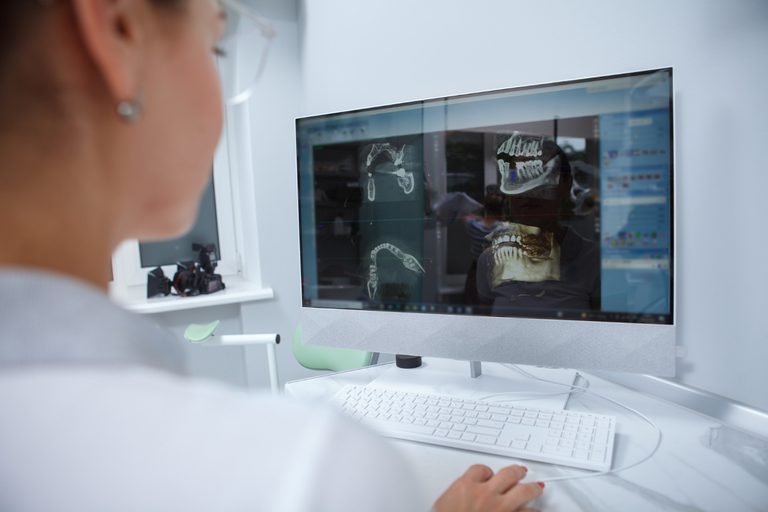
We find out which tooth it is first, which sounds obvious and is not: pulpal pain refers badly and patients point at the wrong tooth perhaps a third of the time. That means a radiograph, cold testing on several teeth, tapping, and in some cases cone beam imaging, which we have in-house.
Then the goal is to get you out of pain the same day — usually by removing the decay and placing a sedative restoration, opening the tooth to relieve the pressure and starting root canal treatment, draining an abscess, adjusting a tooth being traumatised by your bite, or occasionally extraction when the tooth cannot be saved. I do root canal treatment here for routine cases and refer complex endodontic cases to a specialist, and I will tell you at the chair which of those yours is.
Then the part almost nobody mentions on the phone: that the reason they let it get this far is that they are frightened. If the thing stopping you from calling is the dentist rather than the pain, say so. Sedation is a routine option, and for people who have avoided care for years it is often the only thing that makes a first appointment possible.
My guide to getting back into care when you are terrified of the dentist is written for exactly this; what Florida requires before anyone sedates you covers the permits, monitoring and screening; and if you manage a heart condition, diabetes or sleep apnea, the preparation differs and I have set it out in sedation when you have a heart condition, diabetes or sleep apnea.
And then there is after. A tooth that needed root canal treatment is weaker than it was and is not finished when the pain stops, which is the argument of why I do not consider the tooth finished until the crown is on; how much tooth is left decides whether that restoration is a filling, an onlay or a crown. If what woke you was a crown coming loose, what to do about a lost or broken crown is the more useful page tonight. And if a tooth has been knocked out rather than gone bad, that is the one true clock-is-running emergency in dentistry: the thirty-minute window that decides if it can be saved.
A Thursday night in Pompano Beach
The following is a composite scenario drawn from common presentations, not a specific patient.
A man in his fifties notices a lower molar is sensitive to cold on a Sunday. By Tuesday it aches for a minute or two after he drinks anything. He is busy, it is not unbearable, and he decides to see how it goes. Wednesday evening it wakes him at one in the morning, throbbing. He takes two painkillers from the bathroom cabinet, lies flat, and gets nothing for it. Around three he remembers something about aspirin and holds one against the gum for twenty minutes.
Thursday morning the tooth is worse and there is a white, raw patch on the gum beside it that is its own kind of pain. He calls when we open, and in the chair there are two separate problems: a molar with irreversible pulpitis, and an aspirin burn that will take ten days to resolve and has nothing to do with the tooth. We open the tooth, relieve the pressure, begin root canal treatment, and he leaves comfortable for the first time in three days. The burn we can only soothe and wait out.
Two things there are worth saying plainly. The aspirin was the only part that was avoidable on the night, and it came from advice he half-remembered. And the whole thing had a four-day runway: the cold sensitivity on Sunday was the appointment to make. Had he come in Monday morning, that tooth would very likely have needed a filling and nothing more, and he would have slept on Wednesday.
Frequently asked questions
What is the strongest thing I can take for a toothache at night?
For dental pain the most effective over-the-counter approach is an anti-inflammatory, taken as directed on the label, either alone or combined with acetaminophen. The American Dental Association’s 2024 guideline on acute dental pain recommends non-steroidal anti-inflammatory drugs “taken alone or along with acetaminophen” as first-line treatment for adults and adolescents aged 12 or older, and does not point to opioids for routine dental pain. I will not give a dose on a public page, because the right amount depends on your kidneys, your liver, your blood pressure and everything else you take. Use the label, and if you take anything daily or have any kidney, liver, stomach or blood-pressure history, call a pharmacist — the late-night line will answer and they will have your record.
Why does my toothache only hurt when I lie down?
Because of pressure, not psychology. The inflamed tissue inside a tooth sits in a hard chamber that cannot expand, so the pain is pressure on nerve endings. When you lie flat, your head is level with your heart, drainage slows and pressure in the small vessels of your head and face rises — and in a tooth already at capacity, a small rise in pressure is a large rise in pain. Sleeping propped up on two or three pillows, or in a recliner, is one of the most effective things you can do tonight, and it is the step people most often skip.
Does a toothache at night mean I need a root canal?
Not always, but spontaneous pain that wakes you is a different signal from pain that spikes on cold and stops within seconds. Brief, provoked pain is often reversible pulpitis and can frequently be treated with something as small as a filling. Deep, throbbing, unprovoked pain that lasts minutes, is worse with heat and sometimes relieved by cold usually means the pulp is dying and will not recover, and that tooth generally needs root canal treatment or extraction. I cannot tell which yours is from a description and neither can you — it takes a radiograph and cold testing on several teeth, partly because pulpal pain refers badly and patients point at the wrong tooth about a third of the time.
Should I go to the emergency room for a toothache in the middle of the night?
Go tonight if there is facial swelling that is spreading, swelling near the eye or under the jaw or in the floor of the mouth, any difficulty breathing or swallowing, a changed voice, fever or chills, an inability to open your mouth more than a couple of centimetres, or pain that appropriate over-the-counter medication does not touch at all. If breathing or swallowing is involved, call 911 rather than driving yourself. Be clear about what the hospital does, though: they will protect your airway, give intravenous antibiotics and fluids and control the pain, but they are not equipped to treat the tooth overnight. Almost everyone is discharged with a prescription and told to see a dentist, so a hospital visit is not a substitute for being seen here — it is the right call when the infection has become a medical problem rather than a dental one.
Is it safe to put clove oil or a numbing gel on a painful tooth?
Neither works well and both can cause harm the way people actually use them at night. Benzocaine gels sit on the gum while the pain comes from inside a sealed chamber underneath, so the relief is minimal, and the US Food and Drug Administration warns that oral benzocaine “can cause a condition in which the amount of oxygen carried through the blood is greatly reduced” — methemoglobinemia, which “can be life-threatening and result in death” — and says these products “should not be used to treat infants and children younger than 2 years.” The risk comes from heavy repeated use, which is exactly what someone in real pain does all night. Undiluted clove oil burns gum tissue; I have treated chemical burns from it. And never hold aspirin against the tooth or gum: ADA MouthHealthy says plainly, “Do not put aspirin on the aching tooth or gum tissues,” because aspirin is an acid and produces a burn that then hurts on its own for a week or more.
My toothache stopped on its own. Do I still need to be seen?
Yes, and this is the single most important answer on this page. A tooth that throbbed for nights and then went quiet has usually not recovered; the nerve inside it has finished dying, so there is no live tissue left to generate pain. The bacteria are still there with an undefended chamber to multiply in, and the next step is the infection moving out of the root tip into the bone. ADA MouthHealthy puts the consequence plainly: “If the abscess is not treated, it can lead to a serious infection in the jaw bone, teeth and surrounding tissues.” The sequence is pain, then silence, then swelling — and the silence is the dangerous part, because it feels like permission to wait. A tooth seen during the quiet phase is usually still savable. A few weeks later it frequently is not.
Can I be sedated for emergency treatment if I am terrified of the dentist?
Yes, and say so when you call rather than after you arrive, so we can plan the visit properly. Sedation is a routine option here, and for many people who have avoided care for years it is the only thing that makes a first appointment possible. What we need before sedating you is your full medication list and your medical history, and if you manage a heart condition, diabetes or sleep apnea there is some specific preparation involved — including fasting instructions that matter more, not less, if you take medication for blood sugar. That preparation is a short conversation on the phone, not a barrier. Tell us when you book, and tell us what you are actually afraid of; it changes how we run the appointment.
Your first step is a conversation
Almost every toothache that wakes someone up gave notice first — a twinge on cold, a spot that caught floss and started to shred it, a tooth that felt odd for a day and then did not. Those are the appointments that take an hour and a small filling instead of three nights and root canal treatment.
The other half of it is the cleaning you have been putting off, because the things that become toothaches are precisely the things found early at a routine visit and radiograph, which is the argument of my piece on what professional cleaning does that brushing cannot. And if your teeth are sensitive generally or worn at the edges, the cause is sometimes not sugar at all but acid, which I wrote about in what acid reflux does to teeth.
For tonight: head up, cold on the cheek, something anti-inflammatory if it is appropriate for you, nothing on the gum, and the emergency signs above in mind. Then call us when we open and tell whoever answers that you were up with a tooth. That sentence moves you to the front of the day.
South Florida Smile Spa is at 572 E McNab Rd, Suite 102, Pompano Beach, FL 33060, and the number is (954) 785-1100. We are open Monday 8:30 AM to 12:30 PM, Tuesday 8:00 AM to 5:00 PM, Wednesday 8:30 AM to 12:30 PM, Thursday 9:30 AM to 6:30 PM and Friday 8:00 AM to 5:00 PM, and closed Saturday and Sunday.
Written by Dr. Nicole M. Berger, DDS, South Florida Smile Spa, Pompano Beach, Florida. This article is general information about dental pain and is not a substitute for an examination or for advice about your own medications. If you have swelling that is spreading, difficulty breathing or swallowing, or a fever alongside tooth pain, seek emergency care now.

Dr. Nicole M. Berger, DDS
Dr. Berger has cared for patients in Pompano Beach for over two decades at South Florida Smile Spa, with a focus on cosmetic dentistry, implants and reconstruction, and sedation options for anxious patients.