

Reviewed by Dr. Nicole M. Berger, DDS — South Florida Smile Spa, Pompano Beach, FL
Sleep apnea treatment in Pompano Beach at South Florida Smile Spa is dental sleep medicine: a custom oral appliance, the SomnoDent, that holds the lower jaw slightly forward during sleep so the airway stays open, for patients with snoring or mild to moderate obstructive sleep apnea, and for patients with severe apnea who cannot tolerate a CPAP machine. Dr. Nicole M. Berger can arrange a home sleep test through a third-party sleep testing company, with the results read by a sleep physician, so that a patient who suspects apnea can be diagnosed, fitted and followed up without a hospital sleep lab. This page explains how obstructive sleep apnea works, who should be tested, how the SomnoDent compares with CPAP, what the fitting and follow-up involve, and what the appliance will and will not do.
Quick answer
Obstructive sleep apnea is repeated collapse of the airway during sleep, which fragments sleep and starves the body of oxygen; loud snoring, gasping, daytime exhaustion, morning headaches and high blood pressure are the usual signs. At South Florida Smile Spa in Pompano Beach, Dr. Berger screens for it at dental exams, can order a home sleep test through a sleep testing company so a sleep physician can diagnose it, and treats snoring and mild to moderate apnea, or CPAP-intolerant severe apnea, with the SomnoDent, a custom two-piece oral appliance that advances the lower jaw a few millimeters to keep the airway open. It is made from a digital scan, fitted and adjusted over a few weeks, and worn only at night. Most patients and bed partners notice quieter, better sleep within days, and a follow-up sleep test confirms the apnea is controlled. CPAP remains the first choice for severe apnea, and the two are sometimes used together.
The Signs
Sleep apnea treatment in Pompano Beach: who should be tested
Most people with obstructive sleep apnea have never been diagnosed, because the events happen while they are asleep. Dentists see the evidence in the daytime, in worn teeth, a scalloped tongue, a crowded airway and a patient who dozes in the chair.
- Loud snoring with pauses. Snoring that stops, then restarts with a gasp or snort, is the classic bed-partner report, and the single most useful clue.
- Waking unrefreshed. Eight hours in bed and still exhausted, dozing while driving or in meetings, and needing naps are signs of fragmented sleep.
- Morning headaches and dry mouth. Low overnight oxygen and mouth breathing leave a dull headache and a parched mouth on waking.
- Clenching and worn teeth. Grinding is often the body’s way of pushing the jaw forward to reopen the airway; heavy wear and a nightguard history prompt a screening.
- High blood pressure, reflux, frequent night urination. Untreated apnea drives all three, and treating it often improves them.
- Risk factors. A neck over 17 inches in men or 16 in women, a receding chin or small lower jaw, a large tongue or tonsils, nasal obstruction, weight gain and age all narrow the airway.
The National Heart, Lung, and Blood Institute’s page on sleep apnea explains the condition, its health consequences and the treatment options, including oral appliances.
SomnoDent oral appliance vs. CPAP vs. other options
| Option | How it works | Best for | Pros | Limits |
|---|---|---|---|---|
| SomnoDent oral appliance (provided here) | Custom upper and lower splints connected by adjustable wings hold the lower jaw forward, opening the airway | Snoring; mild to moderate obstructive sleep apnea; severe apnea in patients who cannot use CPAP | Silent, portable, no power or mask, high nightly compliance, adjusted in small steps; covered by many medical plans | Less powerful than CPAP for severe apnea; needs adequate teeth or implants to hold it; can cause temporary jaw or bite soreness |
| CPAP | A mask delivers pressurized air that splints the airway open | Moderate to severe apnea; the medical first-line treatment | Most effective at any severity when worn | Up to half of patients abandon it within a year because of the mask, noise, dryness or travel |
| Combination (CPAP plus appliance) | The appliance opens the airway so CPAP needs lower pressure | Patients who tolerate CPAP only at low pressure | Makes CPAP easier to keep using | Two devices to maintain |
| Positional therapy and weight loss | Keeping off the back; reducing neck and tongue fat | Mild positional apnea; as an adjunct to anything else | No device | Rarely sufficient alone |
| Surgery (ENT or oral surgeon) | Removing or tightening tissue, nasal surgery, jaw advancement, hypoglossal nerve stimulator | Specific anatomy, or failure of everything else | Can be curative in selected patients | Surgery, recovery, variable results; referred out |
| Over-the-counter boil-and-bite mouthpieces | Soft one-size device molded at home | Simple snoring in someone proven not to have apnea | Cheap | Bulky, poorly retained, cannot be titrated, and can mask untreated apnea |
The Process
From screening to a controlled airway
- Screening. Dr. Berger reviews symptoms, examines the airway, tongue, tonsils, jaw and tooth wear, and uses a short questionnaire to estimate risk. A 3D cone-beam scan can show the airway volume.
- Home sleep test. If apnea is suspected, Dr. Berger orders a home sleep test through a sleep testing company. You sleep in your own bed wearing a small recorder for one or two nights; a board-certified sleep physician reads the results and issues the diagnosis.
- Treatment decision. With the diagnosis and severity in hand, Dr. Berger and the sleep physician agree on the plan: an oral appliance, CPAP, both, or a referral. Patients who already have a diagnosis and a CPAP they cannot use can start here.
- Scan and fabrication. An iTero digital scan of both arches and a bite record in the advanced jaw position go to SomnoMed, and the custom SomnoDent is back in two to three weeks.
- Fitting and titration. The appliance is fitted and you learn to insert, remove and clean it. Over the following weeks the jaw position is advanced in small steps until snoring stops and you wake refreshed, with visits to check the bite, the joints and the fit.
- Confirmation and follow-up. A follow-up home sleep test with the appliance in confirms the apnea is controlled, and the result goes to your physician. The appliance is checked at each dental visit and typically lasts three to five years.

How an oral appliance keeps the airway open
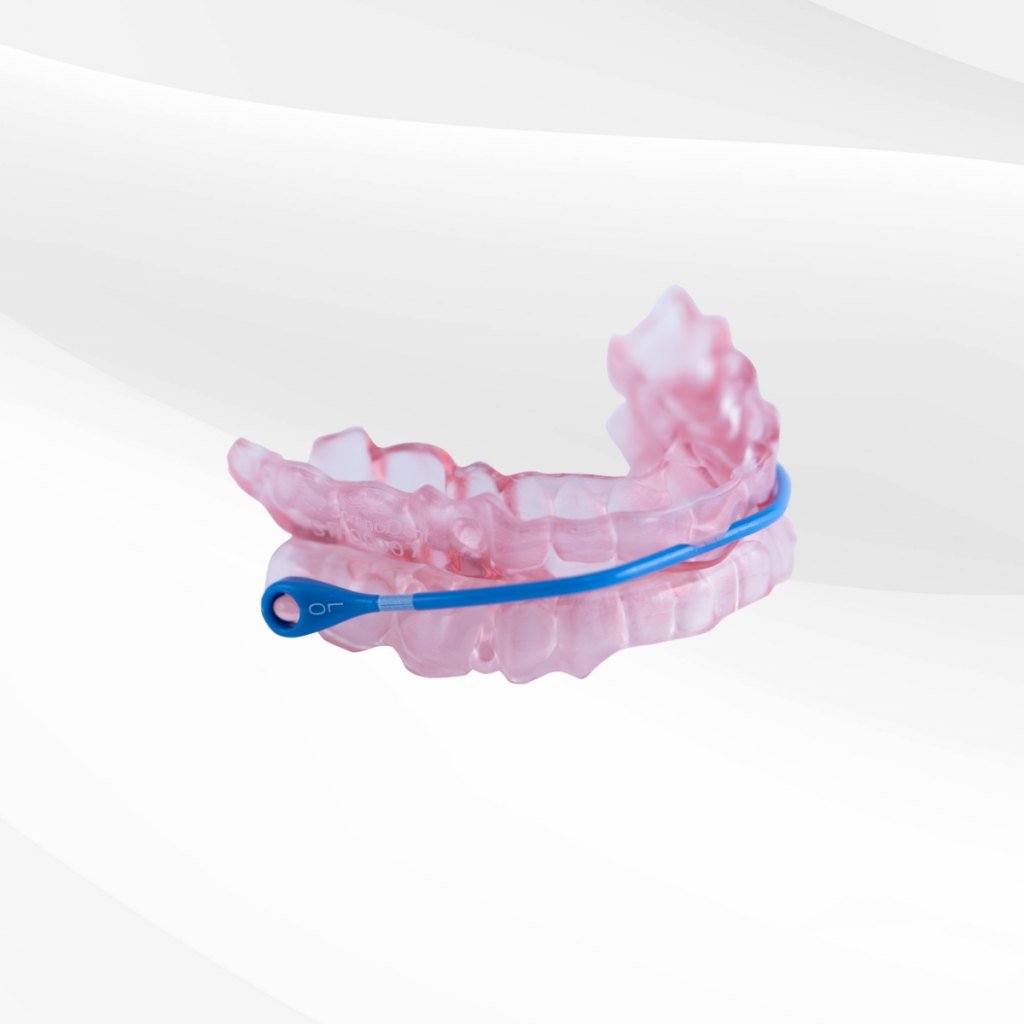
During sleep the muscles of the tongue and throat relax, and in a narrow airway the tongue and soft palate fall back until breathing stops; the brain wakes just enough to tighten the muscles and reopen it, often dozens of times an hour, without the sleeper knowing. The lower jaw carries the tongue, so holding the jaw a few millimeters forward pulls the tongue base away from the back of the throat and tenses the soft tissue, which is the same reason a paramedic tilts a chin forward. A mandibular advancement device does this mechanically for the whole night. The SomnoDent is a two-piece design, with separate upper and lower splints, so you can open, talk and drink with it in; the advancement is set with small adjustable wings and increased gradually until the airway is controlled with the least forward position, which keeps the jaw comfortable.
What the SomnoDent is, and why we use it
The SomnoDent is made by SomnoMed, is FDA-cleared for snoring and obstructive sleep apnea, and is one of the most studied custom oral appliances available. It is made from a digital scan of your teeth, so it fits precisely and holds without bulk, and the advancement is adjustable in fractions of a millimeter so the position can be fine-tuned at follow-up visits rather than guessed at the start. Dr. Berger uses it because it is comfortable enough that patients actually wear it, which is the whole problem with CPAP, and because it is accepted by medical insurers as a recognized treatment. Our iTero scanner page explains the scan; there is no impression putty.
Who is a candidate, and who is not
Snorers without apnea, patients with mild or moderate apnea, and patients with severe apnea who have tried and failed CPAP are the usual candidates. The appliance needs enough sound teeth, or implants, to hold it, so advanced gum disease, extensive missing teeth or loose teeth are addressed first, and a full-denture wearer usually cannot use one. Active jaw-joint problems are assessed before fitting, since the appliance repositions the jaw; many patients with clenching-related jaw pain actually improve, because the device also works as a nightguard. Children, central sleep apnea, and anatomy that needs surgery are referred to the appropriate physician. Patients with severe apnea are offered an appliance only with the sleep physician’s agreement and a follow-up test to prove it is working.
Side effects and living with the appliance
The first week brings extra saliva or a dry mouth, some tooth or jaw soreness on waking, and a sense that the bite is slightly off for a few minutes in the morning; a simple jaw exercise resets it. These settle as the jaw adapts and the advancement is increased slowly. Over years a small permanent change in the bite is possible, which is why the teeth and bite are checked at every dental visit and why the device is advanced no further than needed. The appliance is cleaned daily with a soft brush and cool water, stored dry, and brought to each check-up. It travels in a pocket, needs no electricity, and is silent, which is why bed partners tend to be its most enthusiastic supporters.
Snoring without apnea
Not everyone who snores has apnea, but snoring that disturbs a partner is worth a test, because the only way to tell simple snoring from apnea is to measure it. Once apnea has been ruled out by a sleep study, the same SomnoDent appliance is an effective treatment for snoring alone, and the fitting and follow-up are the same. A patient who comes in for snoring and tests positive for apnea has found out something important about their heart, blood pressure and driving safety, which is the real reason we do not fit appliances for snoring without a study first.
Cost and insurance
Oral appliance therapy for diagnosed obstructive sleep apnea is a medical treatment, and many medical plans, including Medicare, cover a custom appliance when there is a sleep study showing apnea and a physician’s prescription; dental plans generally do not. The home sleep test is billed by the sleep testing company, usually to medical insurance. Our team confirms your medical benefits and the documentation needed before the appliance is ordered and gives you a written estimate. Treatment for snoring alone, without an apnea diagnosis, is not covered and is quoted as a fee.

Care in Pompano Beach
Why patients choose South Florida Smile Spa for sleep apnea treatment
- A dentist trained in dental sleep medicine. Dr. Berger screens, orders the home sleep test, fits and titrates the appliance, and coordinates with your sleep physician.
- Diagnosis without a sleep lab. A home sleep test through a sleep testing company, read by a sleep physician, in your own bed.
- The SomnoDent, custom and adjustable. A recognized, FDA-cleared appliance made from a digital scan and fine-tuned over follow-up visits.
- Teeth, joints and bite looked after. The side effects of an appliance are dental, and they are checked at every visit by the dentist who fitted it.
- Honest about CPAP. Severe apnea is referred for CPAP first; the appliance is offered where guidelines support it or where CPAP has failed.
Patients come for snoring and sleep apnea treatment from Pompano Beach, Lighthouse Point, Deerfield Beach, Fort Lauderdale and Coconut Creek, many of them sent by a partner who has not slept properly in years.
Snoring, exhausted, or done with CPAP
Book a sleep apnea screening with Dr. Berger. A home sleep test can be arranged if needed, and you will learn whether a SomnoDent appliance is the right treatment before anything is ordered.
South Florida Smile Spa · Dr. Nicole M. Berger, DDS · 572 E McNab Rd, Suite 102, Pompano Beach, FL 33060 · (954) 785-1100
Frequently Asked Questions
Can a dentist treat sleep apnea?
Yes, with an oral appliance, once a sleep physician has diagnosed it. Dr. Berger screens for apnea, can order a home sleep test through a sleep testing company, and fits and adjusts the SomnoDent appliance, coordinating with the physician who read your study.
What is the SomnoDent?
A custom two-piece oral appliance made by SomnoMed and FDA-cleared for snoring and obstructive sleep apnea. Separate upper and lower splints connected by adjustable wings hold the lower jaw slightly forward during sleep, keeping the airway open. It is made from a digital scan of your teeth and adjusted in small steps.
Is an oral appliance as good as CPAP?
CPAP is more powerful, especially for severe apnea, but only when it is worn, and many patients abandon it. For mild to moderate apnea, a custom appliance controls the condition in most patients and is worn far more consistently, which is why sleep medicine guidelines support it as a first-line option and for anyone who cannot use CPAP.
How do I get tested?
Dr. Berger orders a home sleep test through a sleep testing company. You wear a small recorder for one or two nights at home, a board-certified sleep physician reads the results, and the diagnosis and severity come back to us to plan treatment. A hospital sleep lab is rarely needed.
Does the appliance hurt?
Expect some jaw or tooth soreness and extra saliva in the first week, and a bite that feels slightly off for a few minutes each morning. These settle as the jaw adapts; the advancement is increased slowly to keep the jaw comfortable, and the joints and bite are checked at each visit.
How long does it take to work?
Snoring usually quiets within the first nights. Full control of the apnea takes a few weeks of gradual advancement, confirmed by a follow-up home sleep test with the appliance in place.
Can I use the appliance if I have dentures or missing teeth?
It needs enough sound natural teeth or implants to hold it. Partial dentures and a few missing teeth are often workable; a full denture usually is not, and implants can sometimes be used to anchor an appliance. Dr. Berger assesses this at the screening.
Is a sleep apnea appliance covered by insurance?
Often, yes, by medical insurance rather than dental, including Medicare, when there is a sleep study showing apnea and a physician prescription. The home sleep test is billed by the testing company to medical insurance. Our team verifies your benefits before the appliance is ordered.
Do you see patients from outside Pompano Beach?
Yes. Patients come for snoring and sleep apnea treatment from Lighthouse Point, Deerfield Beach, Fort Lauderdale, Coconut Creek and across Broward County. The office is at 572 E McNab Rd, Suite 102, Pompano Beach. Call (954) 785-1100 or request an appointment.